
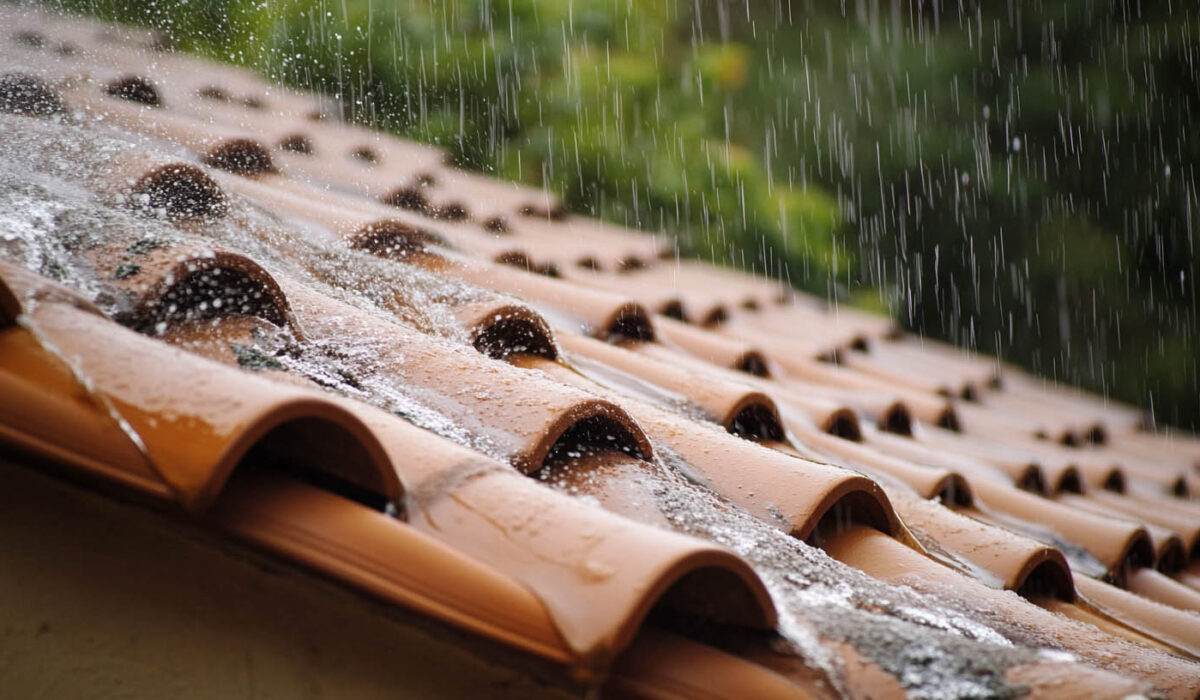
Your tile roof is a significant investment, protecting your home from the elements. At Tile Roofing San Diego, we know that while tile roofs are known for their durability, it is important to understand their limitations and give careful consideration to factors affecting their performance. Heavy rain events in San Diego can test the roof load limits of even the strongest roofing materials. Knowing how much weight your tile roof can handle is crucial for maintaining your home’s safety and structural integrity, especially when the weather turns severe.
Defining Tile Roof Load Limits During Heavy Rain
The term roof load refers to all the weight your roofing system is designed to support. This includes the permanent weight of the tiles themselves and temporary forces like those from heavy rainfall. When rain accumulates, it adds a substantial live load that your roof must be able to bear without compromise. Understanding this concept is the first step toward safeguarding your property. An overwhelmed roof can lead to serious issues, from leaks to structural failure, and in extreme cases, catastrophic damage. We will explore what these load limits mean for your home and why this knowledge is so vital.
Contact UsWhat Does Load Limit Mean for Your Tile Roof?
The load limit for your tile roof, including options like clay tiles, refers to the maximum weight it can safely support, taking into account various factors such as accumulated water from heavy rain, debris, and the overall structural integrity of the roof. Understanding this load limit is crucial for homeowners, as it helps prevent significant damage during extreme weather events. Regular inspections and maintenance can ensure that your roof remains within these limits, providing safety and durability in challenging conditions.
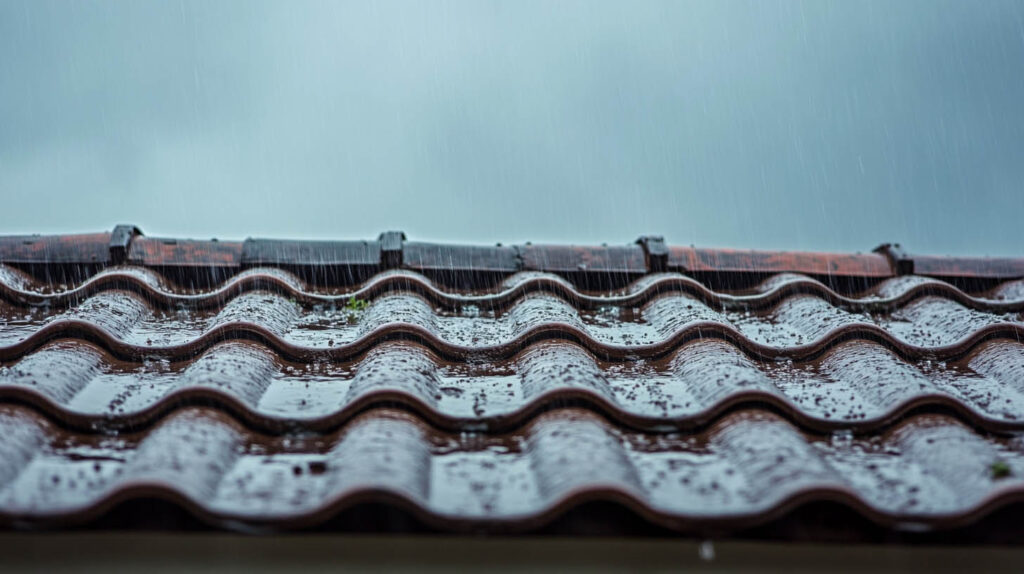
Why Is Roof Load Understanding Crucial for San Diego Homeowners?
For San Diego homeowners, knowing your roof’s load capacity is crucial, especially in coastal areas. Heavy rainfall can strain your roof, leading to water intrusion, sagging, or collapse if overloaded. Ignoring these limits increases the risk of costly damage. Understanding your roof’s capacity helps you protect your home, follow local codes, and make informed maintenance decisions. Partnering with professionals like Tile Roofing San Diego ensures your roof remains strong in any weather.
Key Factors That Affect Tile Roof Load Capacity
A roof’s ability to handle the weight of the roofing material is not universal; various factors influence its overall strength. The roof load capacity is determined by the specific roofing materials used, the design of the roof itself, and the underlying structure that supports it. Each element plays a distinct role in how your roof performs under pressure. Understanding these key factors is crucial for ensuring your tile roof can withstand heavy rain. We will look closer at how the type of tile and the pitch of your roof contribute to its load-bearing capabilities.
Impact of Tile Material, Shape, and Installation Methods
Tile material, shape, and installation methods are key to a roof’s load capacity. Heavier materials like concrete tiles offer durability but require stronger support structures. Tile shape affects water drainage and wind resistance, which is vital during severe weather, meeting specific needs. Proper installation ensures tiles are secure, reducing the risk of structural failure. Understanding these factors helps property owners schedule regular inspections and maintenance, comply with building codes, and extend the roof’s lifespan.
Influence of Roof Pitch and Structural Support Systems
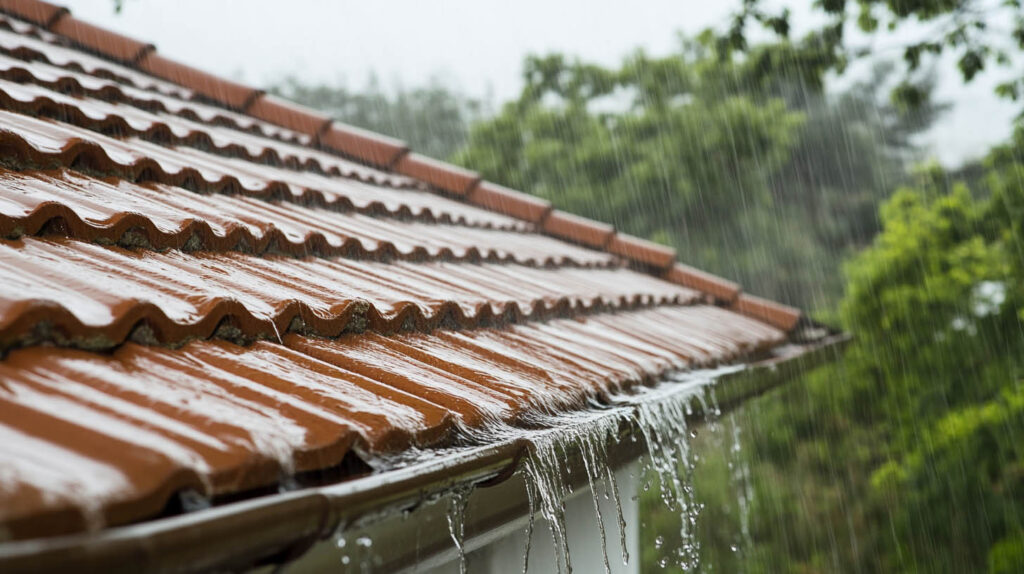
The slope of your roof is key to effective rainwater management. Steeper roofs shed water quickly, preventing pooling and excess weight, while flat or low-slope roofs are more likely to accumulate water and increase live load during heavy rain. Your roof’s structural supports—rafters, trusses, and decking—must be strong enough to handle both the tiles’ weight and environmental stresses, especially in vulnerable areas of your roof. Their design and condition are critical for stability. A structural engineer typically sets specifications to ensure your roof can safely bear expected loads. Always verify that your support system is adequate before starting any roofing project.
Identifying Signs of Overload on Tile Roofs
Knowing the warning signs of a roof surface under too much stress is key to preventing major structural damage. An overloaded roof will often show visible clues that its structural integrity is compromised. Spotting these issues early allows you to address the problem before it leads to costly repairs or a dangerous failure. From the ground or inside your home, you can look for several indicators. Paying attention to your roof, especially after a heavy storm, can help you protect your investment. Let’s review the specific signs that your roof tiles and structure may be under duress.
Visible Warning Signs and Subtle Clues Homeowners Should Watch For
Monitoring your tile roof for warning signs is essential during heavy rainfall events. Watch for loose tiles, cracks, warping, stains, or ceiling discoloration—these may indicate leaks or structural issues that could lead to more significant problems if left unaddressed. Sagging or shifting tiles also suggest damage that needs immediate attention. Additionally, check if gutters overflow during storms; this can reveal hidden problems. Implementing proactive measures, like regular inspections by a qualified professional, can help catch issues early, ensure code compliance, and extend your roof’s lifespan significantly.
How to Assess Your Roof’s Performance After a Downpour
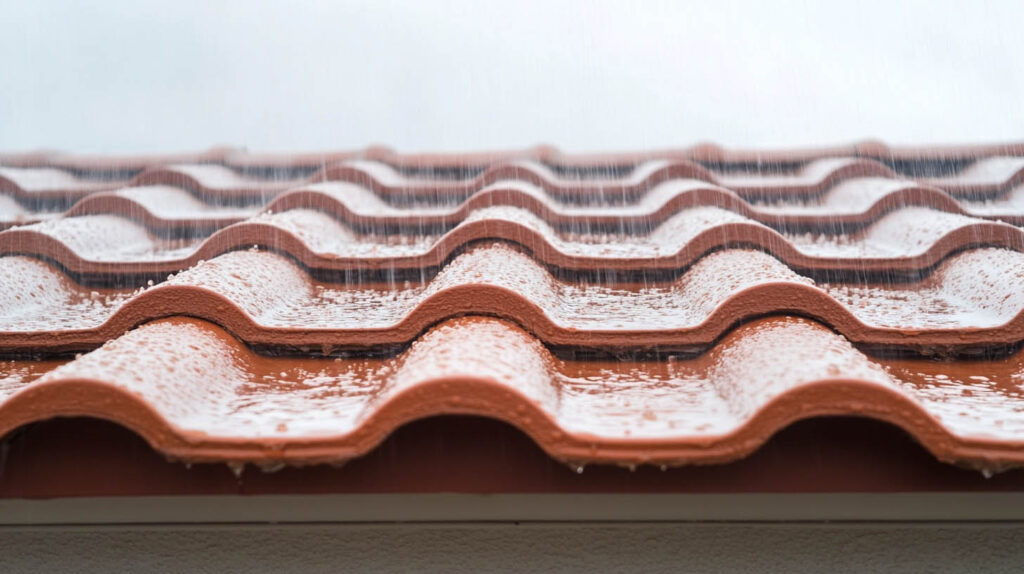
After a heavy rainstorm, assess your roof by observing it from the ground for signs like sagging or damaged tiles. Check gutters and downspouts to ensure they’re clear and directing water away from the foundation. Inspect your attic for moisture, leaks, or damp insulation. A musty smell or visible drips signal issues. These quick checks help gauge your roof’s condition. For a thorough evaluation, professional inspections are recommended. We can conduct regular assessments and offer a free consultation to review roof load calculations to ensure your tile roof is ready for heavy rain.
Meeting Building Code Requirements
Building codes are not just regulations; they are essential safety standards designed to protect you and your property. These codes establish the minimum requirements for construction, including how much load a roof must be able to support. Adhering to these standards is a legal and practical necessity for any roofing project to ensure its intended service life. Following industry best practices goes a step further, often exceeding these minimums to deliver superior performance and longevity. At Tile Roofing San Diego, we are committed to upholding both. Let’s explore what these standards mean for your roof in our city.
How Our Owens Corning and GAF Certifications Safeguard Your Property
Our certifications from leading manufacturers guarantee quality craftsmanship and workmanship. As an Owens Corning Preferred Contractor and GAF Master Elite Contractor, Tile Roofing San Diego meets the industry’s highest standards—credentials that reflect our commitment to excellence. These certifications mean our team is trained in the latest installation techniques, ensuring your roof is built with premium materials and meets or exceeds all load requirements. This provides strong protection against heavy rain. Proper installation and drainage prevent water accumulation and overload. Our expertise also allows us to offer comprehensive warranties, giving you peace of mind that your property is protected.
Why Choose Us
Understanding tile roof load limits during heavy rain is vital for San Diego homeowners’ safety. Concrete tile roofing provides durable, long-lasting protection and is an excellent choice for the region. Tile Roofing San Diego combines traditional craftsmanship with modern techniques to maintain roof integrity and prevent damage. As Owens Corning and GAF certified contractors, we uphold top industry standards to protect your property from weather risks. Recognize signs of overload and regularly assess your roof’s condition to safeguard your investment. For questions or assistance, contact our expert team.
Read our blog: Tile Roof Maintenance Mistakes That Cost Homeowners Thousands
Frequently Asked Questions
How to calculate rain load on roof?
Calculating the rain load on a roof involves complex roof load calculations and roof design considerations that consider the roof’s area, slope, and drainage system capacity. Due to the variables involved with environmental loads, these calculations are best performed by a qualified structural engineer to ensure accuracy and safety.
Can a roof support a 300lb person?
Whether a roof can support a 300-pound person depends on multiple factors, including its design, the overall condition of the roof structure, and the potential snow loads that may be present. While most roofs are indeed built to handle a temporary live load for maintenance purposes, it is always best to exercise caution and avoid taking unnecessary risks. To ensure structural safety and integrity, it is advisable to consult a qualified professional for guidance.