
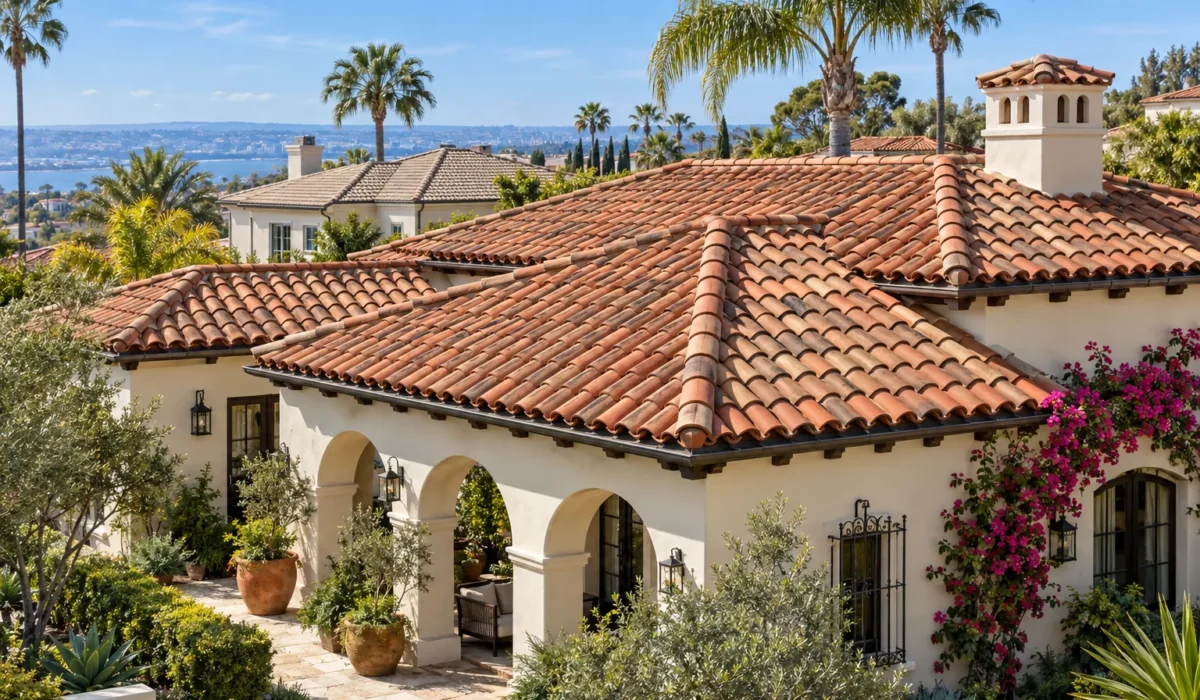
Choosing the best tile roof profiles for San Diego architecture requires balancing architectural authenticity, coastal durability, and neighborhood design standards. At Tile Roofing San Diego, located in San Diego, CA, we help homeowners, HOA boards, and property managers select roofing profiles that complement Spanish Colonial, Mediterranean, Mission Revival, and contemporary properties. Whether planning a new tile roof installation or replacing an aging roof, understanding the differences between Mission, Spanish, S-tile, flat concrete, and barrel tile helps protect architectural character and long-term property value.
Why Tile Roof Profiles Matter in San Diego
San Diego's architectural diversity makes roof profile selection particularly important. Traditional Spanish homes often feature deeply curved terracotta tiles, while contemporary coastal residences favor cleaner, flatter rooflines.
A tile profile influences three essential characteristics:
- Architectural appearance: Curvature, texture, and shadow patterns determine how the roof complements exterior walls, windows, and landscaping.
- Installation requirements: Tile dimensions, overlaps, fastening methods, and roof geometry affect installation complexity.
- Long-term maintenance: Product availability, material durability, and replacement compatibility influence future repair costs.
For HOA communities in La Jolla, Del Mar, Coronado, and Rancho Santa Fe, roof profiles also contribute to consistent neighborhood aesthetics.
Comparing the Best Tile Roof Profiles for San Diego Homes
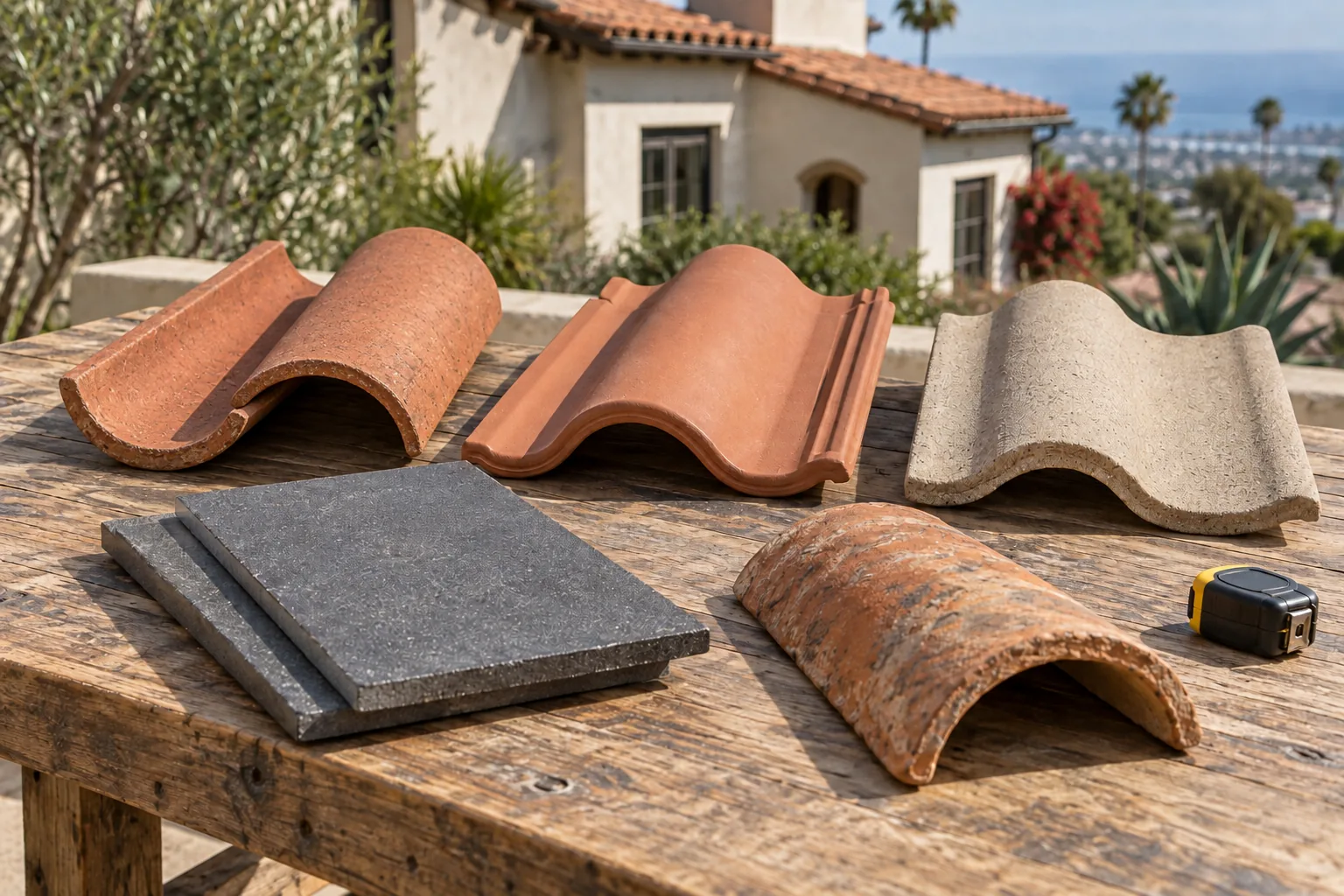
| Tile profile | Architectural style | Key characteristic |
| Mission | Mission Revival, Spanish Colonial | Traditional two-piece construction |
| Spanish | Spanish Colonial, Mediterranean | Pronounced curved appearance |
| S-Tile | Mediterranean, suburban Spanish | Integrated S-shaped profile |
| Flat Concrete | Modern, contemporary | Clean, straight rooflines |
| Barrel | Historic Spanish, Mediterranean estates | Rounded half-cylinder tiles |
Manufacturer terminology varies. Traditional Mission roofing uses separate pan and cover tiles, while modern Spanish and S-tile products frequently have overlapping profile descriptions.
1. Mission Roof Tiles: Authentic Southern California Character
Mission roof tiles represent one of California's most recognizable roofing traditions. Traditional installations use two separate curved components: lower pan tiles that channel water and upper cover tiles that protect the joints.
This arrangement creates pronounced shadows and the distinctive texture associated with historic California missions.
Best Homes for Mission Roofing
We recommend considering Mission tiles for Spanish Colonial Revival residences, historic properties, and traditional stucco homes in Mission Hills, Point Loma, and established San Diego neighborhoods.
Natural terracotta, weathered red, and blended earth tones complement arched windows, decorative ironwork, and exposed wooden beams.
Important installation consideration: Two-piece Mission systems generally require more individual tile handling than comparable single-piece profiles. We evaluate installation labor, attachment methods, structural loading, and replacement tile availability before recommending this option.
2. Spanish Roof Tiles: Classic Mediterranean Elegance
Spanish roof tiles feature prominent curves that create deep shadow lines and a distinctive Mediterranean appearance.
Modern Spanish-style products often incorporate a pronounced wave into one interlocking tile, offering traditional aesthetics with contemporary manufacturing consistency.
Where Spanish Tile Roofing Works Best
Spanish profiles complement Mediterranean villas, hacienda-style residences, and Spanish Colonial homes throughout La Jolla, Rancho Santa Fe, and coastal San Diego.
Popular finishes include terracotta, antique red, sand, and multitone earth blends.
We consider both clay and concrete Spanish-style tiles, depending on architectural requirements, budget, and desired surface texture.
Clay provides traditional fired-earth character, while concrete offers a broad range of manufactured profiles and finishes.
For additional material comparisons and installation considerations, explore our ultimate guide to Spanish tile roofing.
3. S-Tile Roofing: Traditional Appearance With Modern Versatility
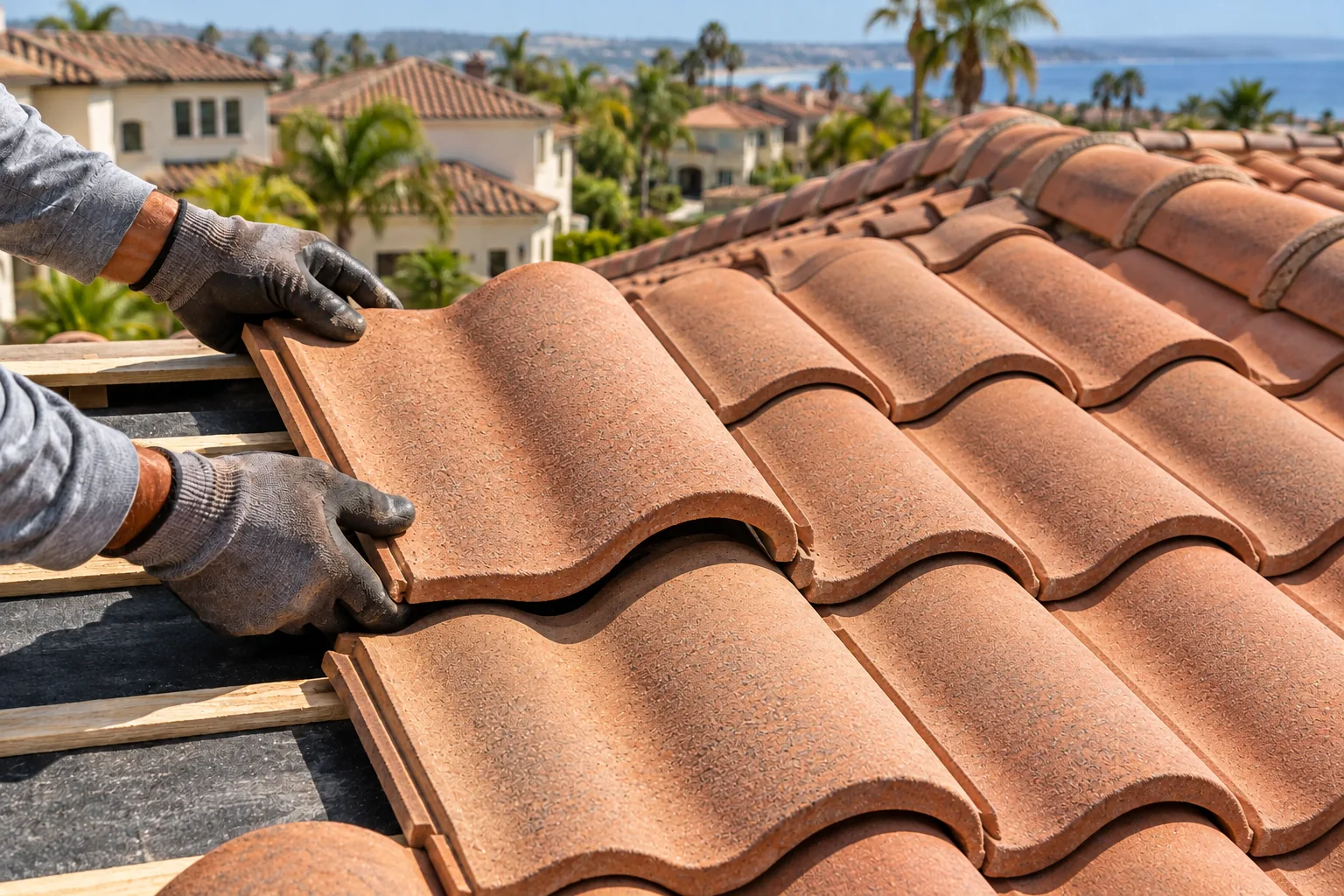
S-tile combines a raised curved section and an adjoining drainage channel into one integrated roofing unit.
The distinctive S-shaped profile resembles traditional Spanish roofing but commonly uses an interlocking installation system.
Why S-Tile Works for HOA Communities
We frequently consider S-tile for Mediterranean-inspired subdivisions, residential developments, and managed properties requiring architectural consistency.
Its advantages include:
- Standardized tile dimensions for consistent roof patterns.
- Multiple manufacturer-approved colors and finishes.
- Coordinated ridge, hip, and edge accessories.
- Potentially simpler field installation than traditional two-piece systems.
For property managers overseeing multiple buildings, standardized profiles can simplify future material selection and replacement planning.
However, similarly named S-tile products are not necessarily interchangeable. We verify curvature, dimensions, interlocking geometry, and manufacturer specifications before selecting replacements.
4. Flat Concrete Roof Tiles: Contemporary Coastal Design
Flat concrete tiles offer a streamlined appearance that complements modern architecture.
Unlike deeply curved Spanish profiles, flat concrete tiles create relatively uniform surfaces and defined horizontal lines.
These characteristics suit minimalist homes, contemporary coastal residences, and transitional properties.
Best Applications for Flat Concrete Tiles
We consider flat concrete roofing for modern homes in Del Mar, Encinitas, La Jolla, and other communities where clean architectural proportions are important.
Charcoal, slate gray, taupe, and muted earth tones complement contemporary stucco, natural stone, and wood accents.
Flat concrete tiles can also feature textured finishes inspired by slate.
However, flat appearance should never be confused with low-slope compatibility. We verify roof pitch, drainage design, and manufacturer-approved installation requirements before specifying any flat-profile roofing system.
5. Barrel Roof Tiles: Traditional Roofing for Historic Properties
Barrel tiles feature rounded, half-cylinder shapes traditionally associated with Spanish and Mediterranean architecture.
Although barrel and Mission roofing are closely related, barrel describes the tile's physical curvature, while Mission commonly describes a two-piece installation arrangement.
Preserving Architectural Authenticity
We recommend evaluating barrel tiles for historic Spanish estates, Mediterranean residences, and restoration projects where matching original materials is essential.
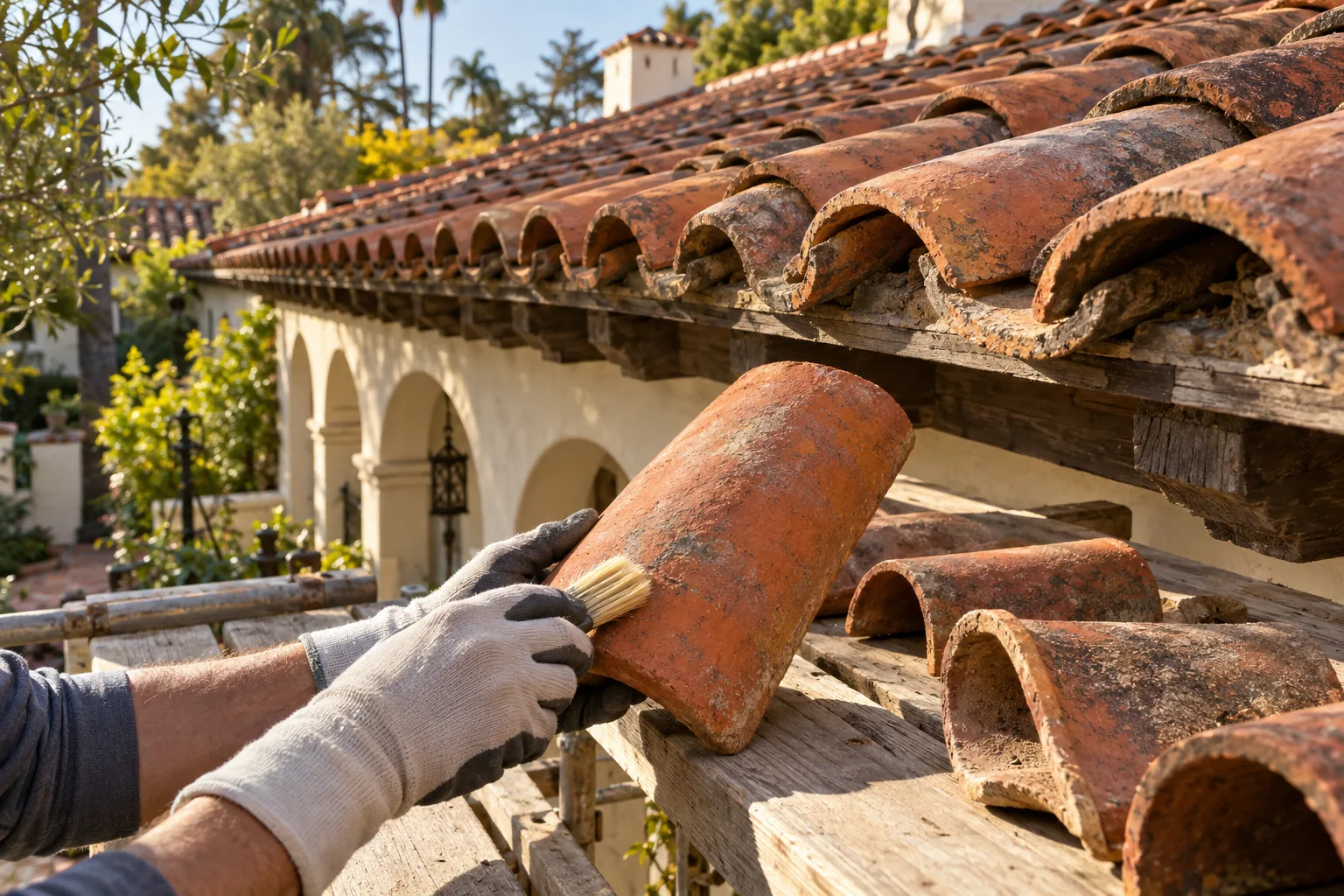
Older clay tiles may feature irregular dimensions, natural color variation, and weathered textures that modern products cannot replicate exactly.
When restoring these roofs, we examine curvature, tile length, exposure, overlap, and attachment details.
Preserving reusable original tiles can help maintain historic character while reducing unnecessary material replacement.
Clay vs. Concrete Roof Tiles: Which Material Is Better?
Both clay and concrete roofing can provide long-lasting performance when correctly specified and installed.
| Feature | Clay tile | Concrete tile |
| Appearance | Traditional, natural character | Broad selection of finishes |
| Color | Fired-earth and specialty finishes | Manufactured colors and blends |
| Cost | Often higher for premium products | Frequently more budget-flexible |
| Profiles | Mission, barrel, Spanish, flat | Spanish, S-tile, flat |
| Weight | Product-dependent | Product-dependent |
We never assume one material is automatically lighter or more durable. Structural loading, weather resistance, and longevity depend on the specific product and complete roofing assembly.
San Diego Climate and Tile Roof Installation Requirements
San Diego's combination of coastal moisture, salt exposure, intense sunlight, and seasonal winds influences roofing material selection.
Coastal properties require particular attention to corrosion-resistant fasteners, flashing materials, and compatible roof accessories.
We also evaluate underlayment because tile itself is a water-shedding covering, not the roof's sole waterproofing layer.
Under the 2025 California Residential Code, Section R905.3, clay and concrete roof tiles generally require:
- A minimum roof slope of 2.5:12.
- Double underlayment application for slopes from 2.5:12 to below 4:12.
- Clay tile compliance with ASTM C1167.
- Concrete tile compliance with ASTM C1492.
Additional requirements address wind resistance, fastening, and installation conditions. We verify applicable local amendments and manufacturer instructions for each project.
HOA Tile Roof Requirements and Architectural Approval
For HOA boards and property managers, selecting a roof profile involves more than choosing a material that resembles existing roofs.
Architectural guidelines may specify approved tile shapes, colors, finishes, and installation details.
We recommend documenting the following before ordering materials:
- Approved manufacturer and product profile.
- Tile material, color, and finish.
- Ridge, hip, and edge accessory specifications.
- Structural and installation compatibility.
- Future availability of matching replacement tiles.
For multi-building communities, maintaining these records helps prevent inconsistent roofing appearances during phased replacement projects.
Historic Preservation and Roofing Permits
San Diego properties with historic designation may require additional review.
According to the City's Minimum Standards for Renewal of Roof Covering, reroofing designated historic resources or properties within adopted historic districts requires permits. Buildings at least 45 years old may also require historic review, subject to applicable exemptions.
City of San Diego Official Website
We recommend verifying these requirements before selecting replacement materials.

Matching Tile Roof Colors With Architectural Profiles
Roof color should reinforce the selected profile rather than compete with the home's exterior design.
Terracotta and warm red blends naturally complement Spanish Colonial and Mission architecture. Sand, beige, and weathered earth tones suit Mediterranean residences, while charcoal and muted gray create contemporary contrast.
We also consider the appearance of tile samples under San Diego's direct sunlight, since outdoor lighting can significantly change perceived color.
Our guide to tile roof color trends for San Diego homes explains additional combinations for traditional and modern architecture.
Choosing the Right Tile Profile for Roof Replacement
We begin tile roof replacement planning by evaluating the property's architectural style, existing roof structure, slope, and environmental exposure.
For HOA communities, we compare approved specifications against available manufacturer products before finalizing recommendations.
We also consider roof complexity, installation costs, replacement tile availability, and long-term maintenance requirements.
The best choice is not necessarily the most expensive profile. It is the product that achieves architectural consistency while meeting technical requirements and remaining practical to maintain.
Conclusion
Selecting the best tile roof profiles for San Diego architecture requires understanding how Mission, Spanish, S-tile, flat concrete, and barrel tiles complement different building styles. Mission and barrel tiles preserve traditional character, Spanish and S-tile profiles enhance Mediterranean homes, and flat concrete tiles provide contemporary elegance.
We help homeowners, HOAs, and property managers balance architectural appearance, material compatibility, and reliable roof performance. For professional guidance on tile roof installation or replacement, visit tileroofsandiego.com to discuss your roofing project.
Frequently Asked Questions
1. Which tile roof profile is best for Spanish-style homes in San Diego?
Mission, Spanish, and barrel tile profiles are excellent architectural choices. We recommend comparing the home's original design, roof slope, existing materials, and HOA requirements before selecting a specific product.
2. Can an HOA require homeowners to use a specific roof tile profile?
Yes. HOA architectural guidelines may specify approved roof tile materials, profiles, colors, and finishes. We recommend obtaining written architectural approval before ordering replacement roofing materials.
3. Are flat concrete tiles better than Spanish tiles for coastal properties?
Neither profile is universally better. Both can perform effectively when installed with appropriate underlayment, corrosion-resistant accessories, and approved fastening systems. We prioritize architectural compatibility, product specifications, and coastal exposure when recommending a profile.