

A leaking tile roof can quickly turn a manageable roofing problem into expensive interior water damage. At Tile Roofing San Diego, we help homeowners, HOA boards, and property managers in San Diego, CA, respond to urgent tile roof leaks before moisture compromises ceilings, insulation, drywall, and structural components. Whether water enters during heavy rainfall, after strong coastal winds, or through deteriorated underlayment, taking the right precautions before a professional roofer arrives can significantly reduce additional damage.
What to Do Immediately When Your Tile Roof Starts Leaking
When water begins entering your property, our first priority is protecting occupants and limiting interior damage without creating additional safety hazards.
We recommend following these emergency steps:
- Move people away from affected areas. Avoid rooms with sagging ceilings, falling debris, or water near electrical equipment.
- Protect furniture and valuables. Relocate electronics, documents, and other vulnerable belongings to dry locations.
- Contain dripping water. Position buckets or waterproof containers beneath active leaks where it is safe to do so.
- Address electrical hazards. If water approaches outlets, fixtures, or wiring, avoid contact and arrange for a qualified professional to isolate the electrical supply safely.
- Document visible damage. Photograph ceiling stains, dripping water, and damaged belongings before cleanup when practical.
- Contact an emergency tile roofing contractor. Describe the leak location, severity, and any visible storm damage.
These actions help stabilize interior conditions while preserving valuable information for professional inspection.
Never Walk on a Leaking Tile Roof
One of the most dangerous mistakes homeowners make during a roofing emergency is climbing onto a wet tile roof to locate the leak.
Clay and concrete roofing tiles can crack under concentrated loads, shift unexpectedly, or become extremely slippery when wet. A damaged tile may also conceal weakened roof decking or deteriorated underlayment.
The Occupational Safety and Health Administration identifies falls, slippery roofing materials, and unstable surfaces as significant hazards in its residential roofing fall-prevention guidance.
We strongly discourage homeowners and property maintenance personnel from attempting rooftop inspections, repositioning tiles, applying sealants, or installing tarps themselves.
Professional tile roof leak repair requires appropriate access equipment, fall protection, and knowledge of how tile roofing assemblies manage water.
Even one improperly placed foot can break additional tiles and create new leak pathways.
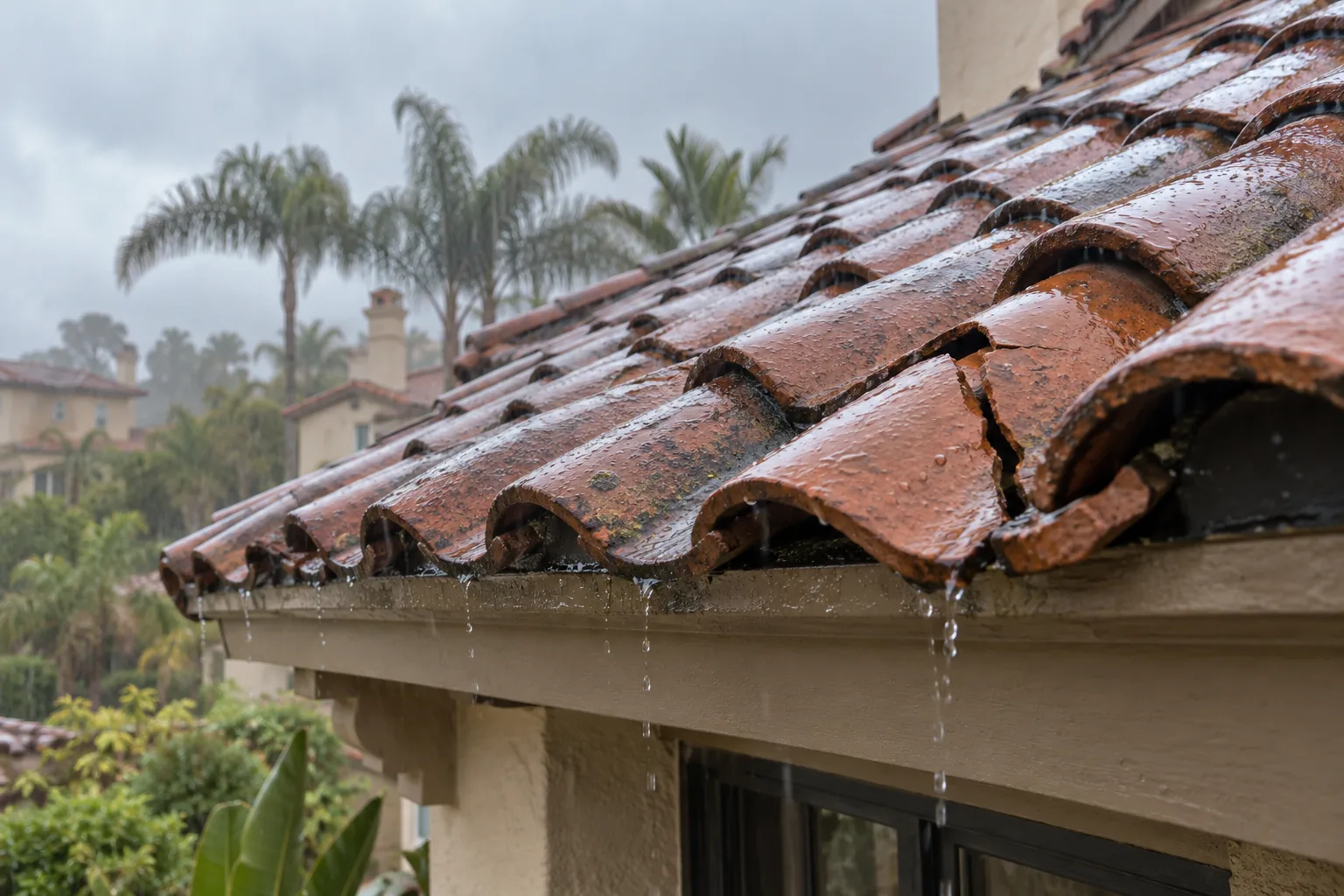
How to Minimize Interior Water Damage Before Emergency Roof Repair
Protect Ceilings, Walls, and Flooring
Water traveling through a tile roof may follow rafters, roof decking, or framing members before appearing inside the building. Consequently, an interior ceiling stain does not necessarily indicate the exact location of the roof defect.
We recommend placing containers beneath active drips, relocating vulnerable belongings, and protecting dry flooring with waterproof coverings.
If drywall begins bulging, cracking, or sagging, keep occupants away from the affected area. Water-saturated ceiling materials can collapse unexpectedly.
Do not puncture a swollen ceiling or attempt to remove saturated drywall without an appropriate safety assessment.
Reduce the Risk of Mold and Secondary Damage
Stopping visible dripping does not mean the underlying materials are dry.
Moisture can remain trapped within insulation, ceiling cavities, and wooden framing long after rainfall ends.
According to the U.S. Environmental Protection Agency's mold prevention guidance, wet materials should generally be cleaned and dried within 24–48 hours to help prevent mold growth.
We recommend arranging prompt professional drying when water has entered insulation, wall cavities, or other concealed spaces.
Dehumidifiers may help reduce indoor humidity when electrical conditions are safe, but they cannot replace proper leak repair or moisture assessment.
Why Tile Roofs Leak During San Diego Rainstorms
San Diego's generally dry climate can create a false sense of security about roof performance. Extended periods without rainfall may conceal vulnerabilities until a winter storm exposes them.
Tile roof leaks commonly originate from several components.
Deteriorated Roof Underlayment
Clay and concrete tiles shed most rainwater, but the underlying water-resistant system provides a critical secondary barrier.
Over time, underlayment can become brittle, deteriorate around penetrations, or lose its ability to resist water intrusion.
A roof may therefore leak even when the visible tiles appear undamaged.
Cracked, Slipped, or Displaced Tiles
Wind exposure, falling branches, previous maintenance activities, and aging components can contribute to tile displacement or breakage.
These openings allow more water to reach the underlayment, increasing leakage risk where the secondary barrier is compromised.
Damaged Flashing Around Roof Penetrations
Chimneys, skylights, plumbing vents, roof-to-wall intersections, and valleys require carefully installed flashing systems.
Corrosion, separation, improper overlaps, and failed installation details can allow water to penetrate beneath surrounding roofing materials.
Coastal properties in La Jolla, Coronado, Del Mar, and other exposed communities may require particular attention to metal component corrosion.
Blocked Roof Valleys and Drainage Areas
Leaves, branches, and accumulated debris can obstruct water movement through roof valleys and drainage pathways.
During heavy rainfall, backed-up water may reach vulnerable flashing transitions or deteriorated underlayment.
Because each of these problems requires a different repair approach, accurate diagnosis is essential.
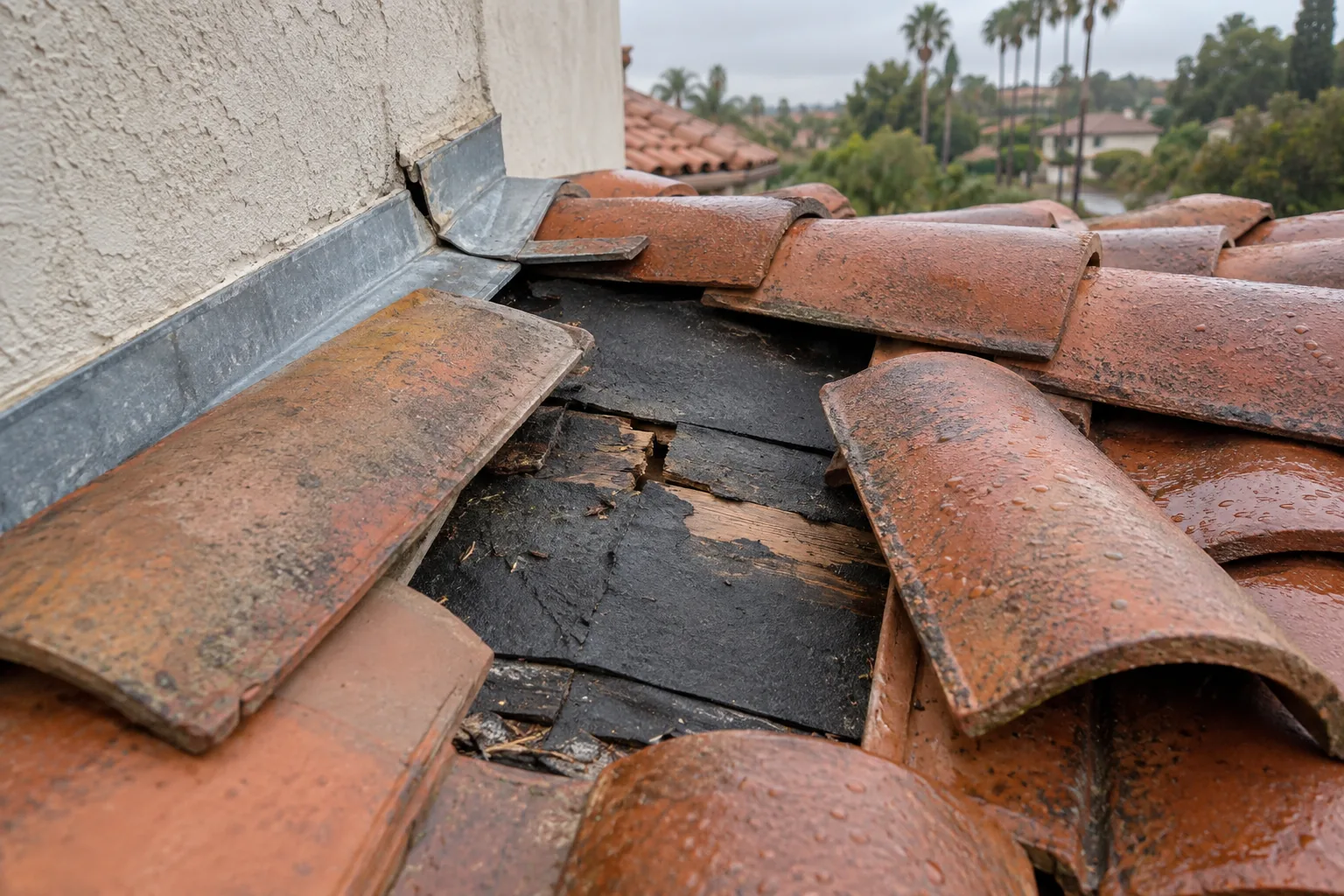
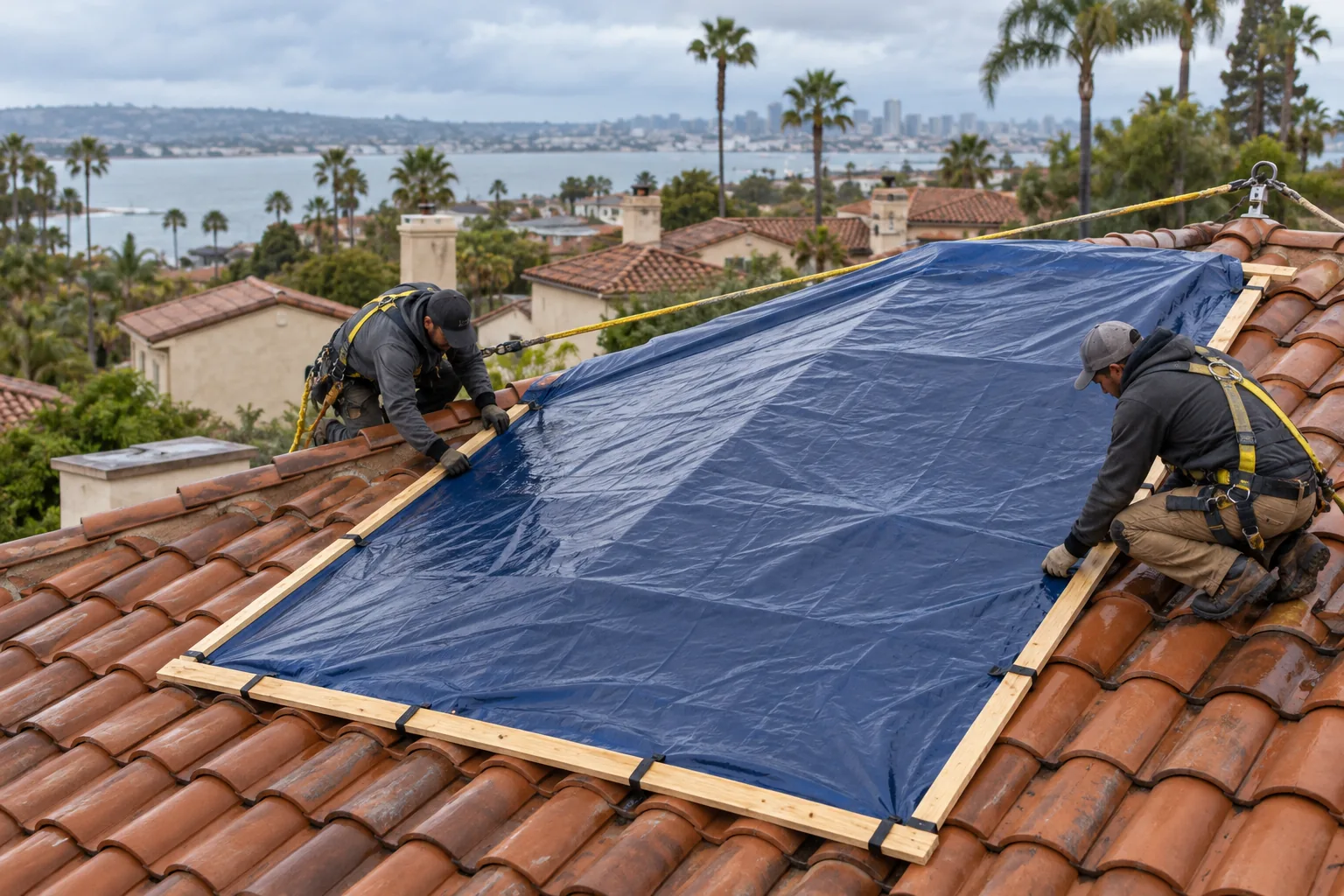
Emergency Tile Roof Tarping: Why Professional Installation Matters
Temporary waterproof protection may be necessary when an active leak cannot be permanently repaired immediately.
However, installing a tarp over a tile roof is not equivalent to covering a flat surface.
Tiles have curved or interlocking profiles, and improper tarp placement can redirect water beneath intact roof sections. Unsecured materials may also become dangerous during high winds.
We evaluate the roof's condition, weather exposure, and available anchoring methods before determining whether temporary protection is appropriate.
Professional emergency protection is intended to reduce further water intrusion until conditions permit a lasting repair. It should never be treated as a permanent substitute for restoring damaged roofing components.
Emergency Tile Roof Leak Response for HOAs and Property Managers
For condominium communities, multifamily properties, and managed residential buildings, a roof leak can affect multiple units and shared building components.
We recommend that HOA representatives and property managers establish a clear response process before the next storm.
Identify Affected Units and Common Areas
Water entering an upper-floor unit may travel into adjoining walls, shared ceilings, stairwells, or lower residences.
Management should document all reported intrusion locations, identify potential electrical hazards, and restrict access to unsafe areas.
Document Damage and Notify Relevant Parties
A useful incident record includes:
- Date and approximate time the leak was discovered.
- Unit numbers and locations of visible water intrusion.
- Photographs of damaged ceilings, walls, and belongings.
- Weather conditions and reported leak progression.
- Emergency mitigation measures already performed.
- Contractor inspection findings and repair recommendations.
Property managers should also review applicable governing documents and insurance policies to determine notification and maintenance responsibilities.
Coordinate Emergency Repairs Without Delays
Delaying authorization can allow moisture damage to spread beyond the initial leak location.
We recommend maintaining current contractor contact information, clearly defined emergency spending authority, and established procedures for accessing occupied units.
For larger communities, documenting repair priorities helps distinguish active water intrusion from nonurgent maintenance concerns.
What to Expect During a Professional Emergency Tile Roof Inspection
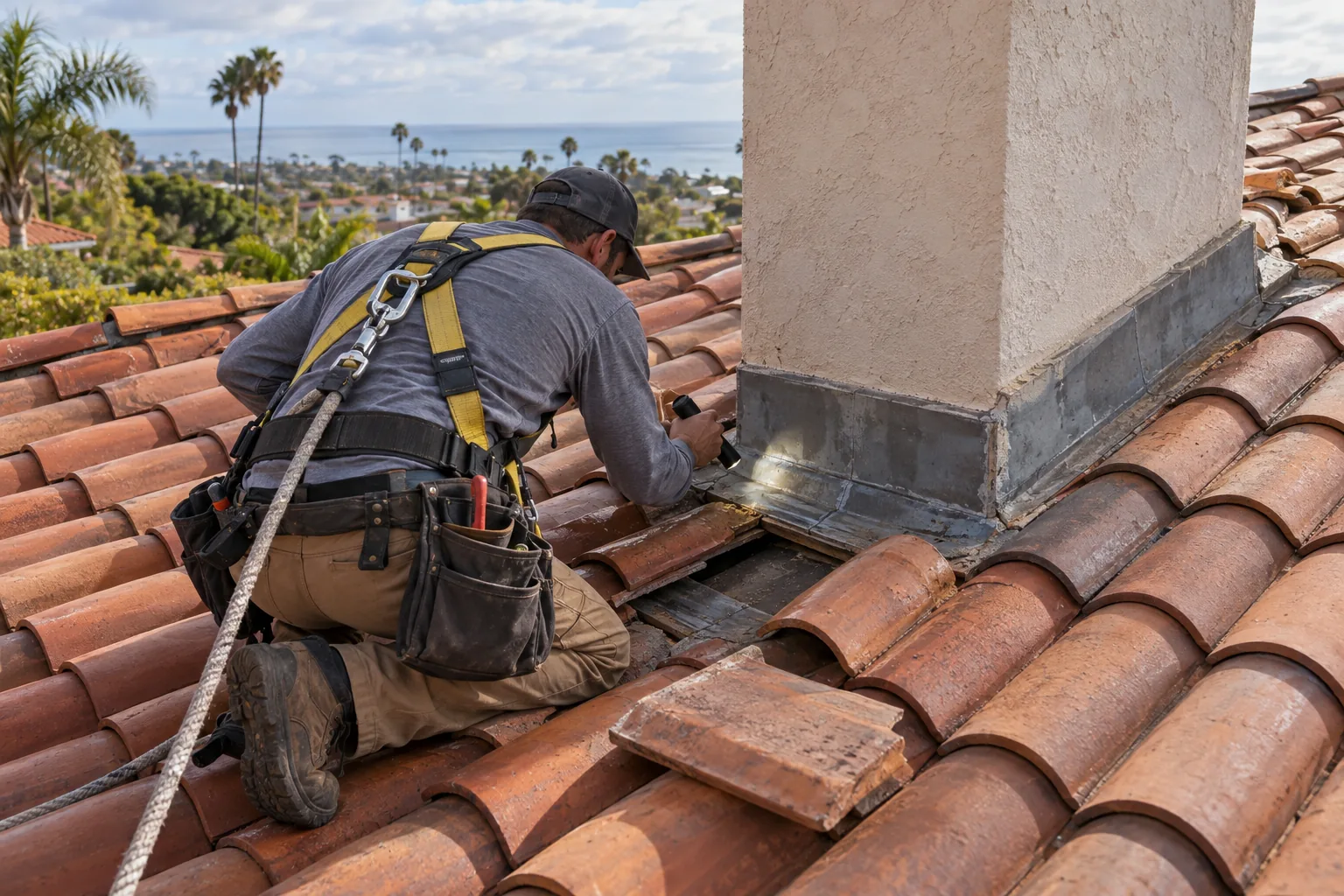
Once site conditions are safe, our approach to emergency tile roof repair focuses on identifying the actual water-entry pathway rather than simply treating the visible interior symptom.
A professional assessment may include examining displaced tiles, flashing transitions, roof valleys, penetrations, and accessible underlayment conditions.
We also consider whether the leak originates above or away from the interior stain, since water often travels along concealed structural components before becoming visible.
Depending on the findings, appropriate repairs may involve replacing broken tiles, correcting flashing defects, repairing limited underlayment sections, or recommending a more extensive lift-and-relay procedure when deterioration is widespread.
The repair scope should reflect the roof's actual condition, not assumptions based solely on the age of the tiles.
When Is a Tile Roof Leak Considered an Emergency?
Not every roof stain requires the same response, but certain conditions warrant immediate professional attention.
Urgent warning signs include:
- Active water dripping during rainfall.
- Water entering near electrical fixtures or service equipment.
- Sagging ceilings or evidence of structural movement.
- Multiple rooms experiencing simultaneous leaks.
- Significant tile displacement following strong winds.
- Recurring leaks that continue despite previous repairs.
If structural instability, electrical danger, or immediate injury risk is suspected, occupants should leave the hazardous area and contact appropriate emergency services.
For active roofing problems, prompt evaluation can help prevent damage from extending into otherwise unaffected portions of the property.
Schedule Emergency Tile Roof Leak Repair in San Diego
A temporary bucket beneath a leak may protect your floor, but it does not address moisture entering the roofing system.
We recommend arranging professional assistance as soon as active water intrusion is identified, even if the rain has stopped.
Our emergency repair process prioritizes locating the source, evaluating damage to essential roofing components, and recommending the most appropriate corrective work.
Homeowners, HOA representatives, and property managers can request assistance through our emergency tile roof repair services in San Diego.
Timely professional intervention helps protect interior finishes, reduce additional moisture exposure, and preserve the long-term performance of existing tile roofing systems.
Conclusion
Emergency tile roof leak repair begins with protecting people, limiting interior water damage, and avoiding hazardous rooftop activities. San Diego homeowners and property managers should document visible intrusion, safeguard affected spaces, and contact a qualified tile roofing professional rather than attempting temporary repairs from the roof. Because leaks may originate from hidden underlayment deterioration, damaged flashing, or displaced tiles, a thorough inspection is essential for identifying the correct solution. Prompt professional attention can prevent a localized leak from developing into a more extensive roofing and interior restoration project.
FAQ
1. Can I temporarily fix a leaking tile roof myself?
We recommend limiting homeowner actions to safe interior water containment and property protection. Walking on wet tiles, moving roofing materials, or installing a tarp can create serious fall hazards and additional roof damage. Rooftop repairs should be performed by qualified professionals.
2. Why is my tile roof leaking if none of the tiles are broken?
A tile roof can leak when underlayment deteriorates, flashing separates, or water penetrates vulnerable roof transitions. The visible tiles may remain intact while the underlying waterproofing components fail. A professional inspection is necessary to identify the actual entry point.
3. How quickly should I call a roofer for an emergency tile roof leak?
We recommend contacting an emergency roofing contractor immediately when active water intrusion occurs, particularly if ceilings are sagging, multiple areas are affected, or water approaches electrical components. Early evaluation and appropriate moisture mitigation can help limit secondary damage and prevent a relatively isolated leak from becoming a larger restoration problem.