
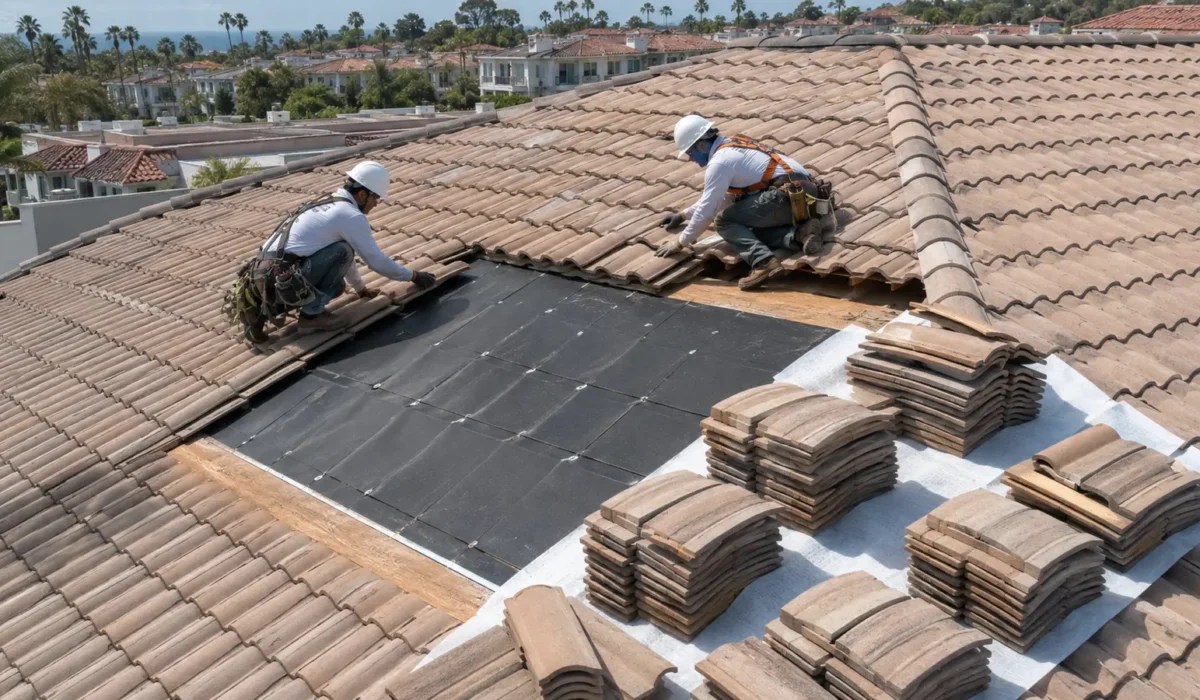
For homeowners associations, condominium communities, and property managers, tile roofing is not a collection of individual roofs—it is a shared capital asset that requires documented, scheduled care. At Tile Roofing San Diego in San Diego, CA, we structure HOA tile roof maintenance plans around annual inspections, photo reporting, tile matching, leak prevention, reserve planning, and phased repair schedules so boards can control costs before isolated defects become community-wide problems.
Why San Diego HOAs Need a Planned Tile Roof Maintenance Program
San Diego’s climate can make deferred roof maintenance easy to overlook. Long dry periods may hide cracked tiles, deteriorated flashings, clogged drainage paths, failed mortar, and aging underlayment until the first sustained rain exposes them. The National Weather Service reports that about 85% of San Diego’s rainfall occurs from November through March. For an HOA, that concentrates leak risk into a predictable window and makes late-summer or early-fall inspection the most practical time to complete preventive work before storms arrive.
A maintenance plan also creates consistency across dozens or hundreds of units. Instead of responding to each ceiling stain as a separate emergency, we track roof sections by building, elevation, tile profile, repair history, observed defects, and priority. This allows the board and property manager to distinguish routine maintenance from near-term capital work.
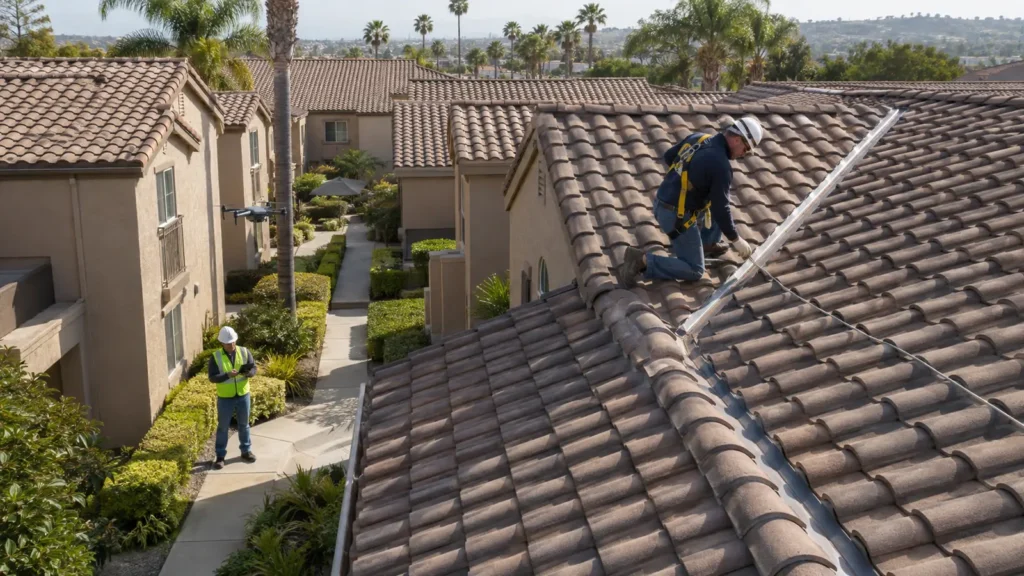
Annual HOA Tile Roof Inspections Should Be Building-by-Building
We recommend one comprehensive inspection cycle each year, with additional inspections after major wind or rain events when conditions justify them. The inspection should cover accessible roof fields, ridges, hips, valleys, eaves, flashings, roof-to-wall transitions, penetrations, vents, skylights, gutters, scuppers, and visible drainage routes.
The objective is not simply to count broken tiles. Clay and concrete tiles are the outer covering; water resistance also depends on underlayment, flashing, fastening, drainage, and properly detailed penetrations. A roof can look visually intact while hidden water pathways develop beneath the tile field.
Each building should receive a condition rating such as routine, monitor, repair within 90 days, or capital-planning priority. That classification gives management a defensible maintenance queue rather than an unstructured list of observations.
Photo Reports Turn Roof Conditions Into Board-Level Documentation
An HOA roof report should be usable by board members who were not present during the inspection. We organize documentation by building number or address and pair each significant condition with a clear photograph, location, description, recommended action, and urgency level.
Useful reports include overview photos, close-ups of defects, annotated roof areas when necessary, counts of broken or displaced tiles, flashing observations, evidence of prior repairs, ponding or debris locations, and indications of underlayment exposure. Repeating the same photo points each year creates a visual history of deterioration.
This record improves vendor accountability and budgeting. It also helps separate a recurring leak from a new problem, identify buildings with accelerating repair frequency, and show whether previous corrective work resolved the original condition.
Tile Matching Must Be Managed as an HOA Asset
Tile matching becomes progressively harder as communities age. Original profiles, colors, blends, surface textures, and manufacturers may be discontinued. Weathering also changes the appearance of installed tile, so a technically compatible new tile can look noticeably different beside an older field.
We recommend creating a community tile inventory before shortages become urgent. The file should document manufacturer, profile, approximate dimensions, color or blend, identifying marks from the underside of sample tiles, photographs, and known compatible replacements. When practical, HOAs should retain salvageable matching tiles removed during prior projects and store them by type.
For visible roof slopes, matching is not only a functional issue. Consistent tile appearance protects architectural uniformity and reduces disputes about patchwork repairs across neighboring units.
Leak Prevention Should Focus on Water Entry Points, Not Only Broken Tiles
Broken tiles deserve correction, but many persistent tile-roof leaks originate at transitions and penetrations. Preventive maintenance should prioritize valleys, chimney and wall flashings, vent pipes, skylights, roof-to-wall intersections, underlayment exposed by displaced tiles, and areas where debris interferes with drainage.
We also look for incompatible sealant-heavy repairs. Surface caulk may temporarily redirect water while concealing a failed flashing detail below. Repeated sealant applications can make future diagnosis more difficult and leave the underlying drainage problem unresolved.
Maintenance records should flag repeat leak zones. If the same building requires repeated interior leak repairs, the association should evaluate the surrounding roof assembly rather than continuing isolated patching.
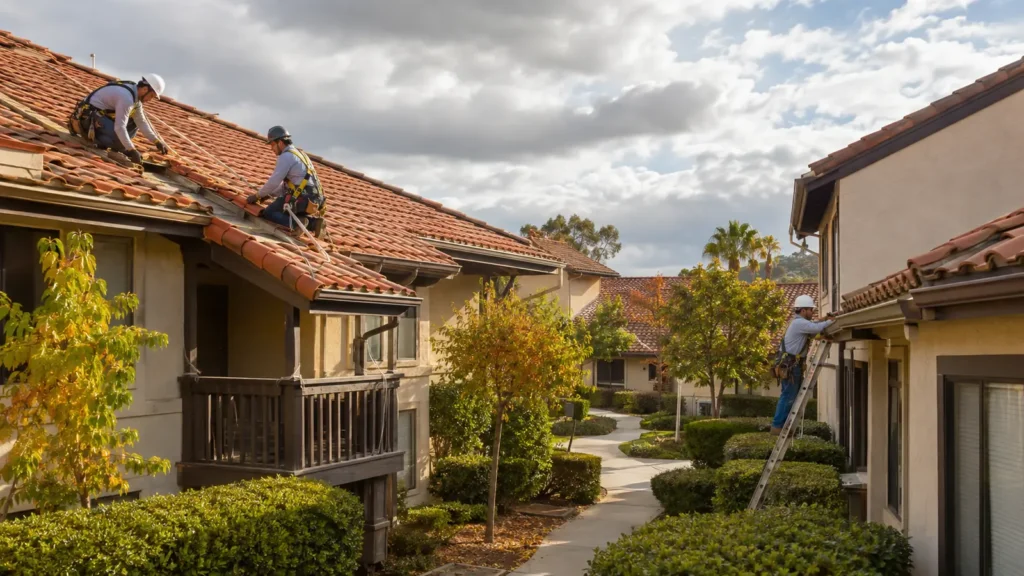
Schedule HOA Roof Maintenance Before San Diego’s Rainy Season
Because San Diego’s precipitation is concentrated in the cooler months, we prefer to complete the main HOA inspection and repair cycle before November. The National Weather Service San Diego climate data states that approximately 85% of local rainfall occurs from November through March.
A practical annual schedule is to inspect in late summer or early fall, approve priority repairs promptly, complete broken-tile, flashing, drainage, and penetration work before sustained winter rain, document storm-related changes during the wet season, and update the long-term capital plan after the inspection cycle.
For large communities, we may divide work into phases so occupied buildings remain accessible and the HOA can align projects with annual budgets.
Budgeting for Repairs, Underlayment Failure, and Lift-and-Relay Work
HOA budgeting should separate predictable annual maintenance from major restoration. Routine operating items may include inspections, limited tile replacement, minor flashing correction, debris removal, and targeted leak repairs. Reserve planning should address larger work such as underlayment renewal, widespread flashing replacement, or phased lift-and-relay projects.
Lift and relay can be appropriate when existing clay or concrete tile remains serviceable but the underlayment beneath it has reached the end of its functional life. The tiles are carefully removed and staged, deteriorated underlayment and related components are replaced as specified, and reusable tiles are reinstalled. This approach can preserve the community’s established tile appearance while addressing the water-shedding system beneath it.
The California Department of Real Estate reserve-study guidance identifies roofs as major common-area components and describes reserve studies as tools for estimating long-term repair and replacement costs, timing, and funding needs. For HOA boards, annual roof-condition data makes those projections more useful because remaining-life assumptions can be adjusted to actual field conditions rather than age alone.
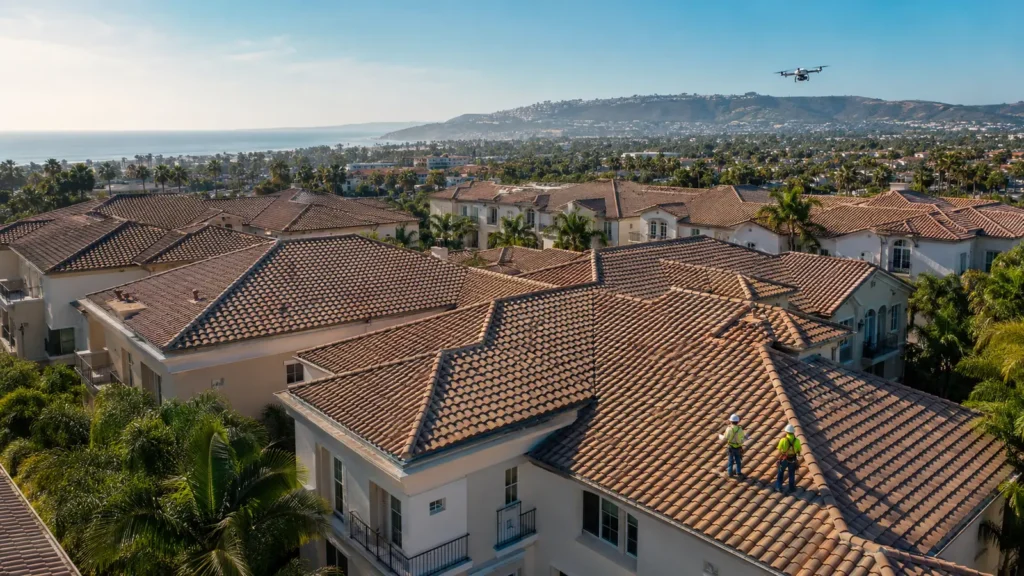
What an HOA Tile Roof Maintenance Plan Should Include
A strong plan should define the roof inventory, inspection frequency, reporting format, repair-priority system, approved tile-matching information, leak-response procedure, maintenance calendar, budget categories, and criteria for escalating a building from maintenance to restoration planning.
We also recommend tracking repair cost per building and the number of leak events per year. Rising repair frequency is often more informative than a single large invoice. When several buildings from the same construction phase begin developing similar problems, the HOA can investigate a systemic issue and price a coordinated project before emergency failures dictate the schedule.
This approach also improves bidding. Contractors can price a clearly defined scope instead of making assumptions about an entire community. Boards can compare proposals by building, repair category, quantity, and priority while maintaining a documented basis for approving immediate work and deferring lower-risk items.
CONCLUSION
A San Diego HOA tile roof maintenance plan should give the board more than a list of repairs. It should create a repeatable system for inspections, photographic documentation, tile matching, leak prevention, rainy-season preparation, and capital forecasting. At Tile Roofing San Diego, we use that structure to help communities move from reactive leak response toward measurable, building-by-building roof asset management.
FAQ
How often should a San Diego HOA inspect tile roofs?
We recommend a comprehensive inspection once each year, preferably before the November-through-March rainy period, with additional inspections after significant storms or when recurring leaks indicate a developing problem.
What should be included in an HOA tile roof photo report?
The report should identify each building, document defect locations with clear photographs, record broken or displaced tiles, flashing and drainage concerns, prior repair areas, urgency levels, and recommended corrective actions.
When should an HOA consider lift and relay instead of spot repairs?
We consider lift and relay when tiles remain reusable but widespread underlayment or related waterproofing components are failing, especially when repeated leaks and repair history show that isolated patching is no longer cost-effective.