

For a property manager or HOA board, a tile roof leak is not simply a maintenance ticket; it is an asset, liability, resident-communication, and documentation problem. At Tile Roofing San Diego, we approach tile roof repairs in San Diego as a controlled process: stabilize water intrusion, identify the true failure point, document conditions, authorize the correct scope, and preserve a record for boards, insurers, and future vendors. The objective is not merely to replace a broken tile, but to protect occupied interiors, prevent repeat leaks, control lifecycle cost, and maintain accountability across the property.
Why Tile Roof Repair Requires Structured Property Management
Clay and concrete tile roofs are multi-component assemblies. The visible tile sheds most rainfall and protects lower layers, but waterproofing also depends on underlayment, flashings, valleys, penetrations, fastening systems, transitions, and drainage paths. The Tile Roofing Industry Alliance notes that penetrations and disruptions in the tile field require appropriate flashing at both the tile and deck/underlayment levels.
This matters because the tile above an interior stain may not be the source. Water can enter at flashing, a pipe penetration, displaced tile, valley obstruction, or deteriorated underlayment, then travel downslope before appearing inside. We treat “replace the cracked tile” as a complete diagnosis only when inspection confirms it.
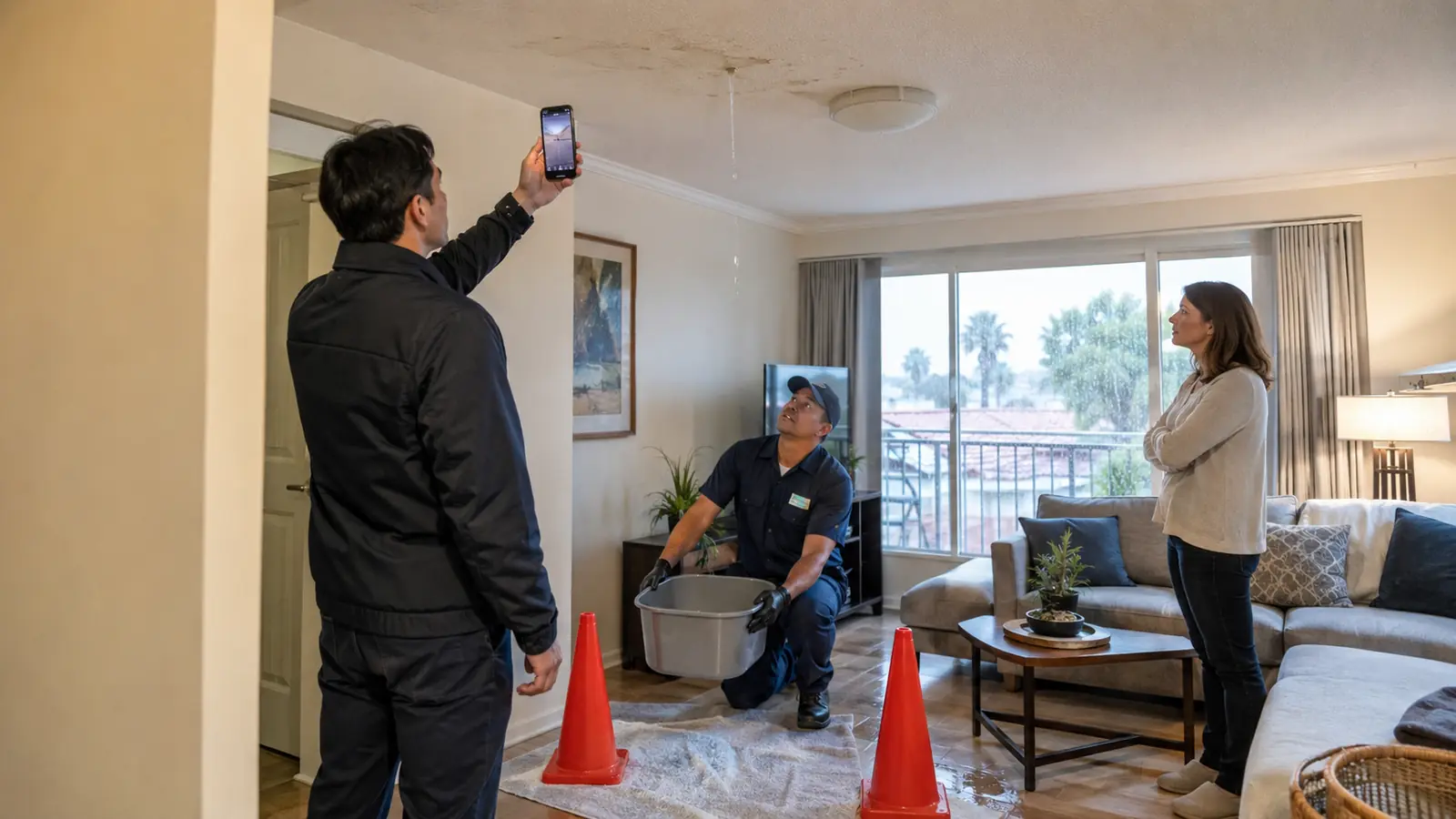
A 0–24 Hour Triage Protocol for Tenant Roof Leak Reports
Every leak report should create a standardized record: property and unit, exact room, time observed, whether water is active, ceiling condition, nearby electrical fixtures, recent weather, prior repairs, and resident photos when available. Water near electrical components, a bulging ceiling, falling material, or rapid intrusion requires immediate escalation and site-safety controls.
Our first objective is mitigation, not cosmetic repair. We protect interiors, contain water where safe, restrict access beneath compromised ceilings, and arrange roof evaluation. Temporary exterior measures should be performed by qualified personnel because unnecessary foot traffic can break otherwise serviceable tiles. The work order should distinguish temporary mitigation from permanent tile roof repair so a tarp or short-term seal never closes the repair ticket.
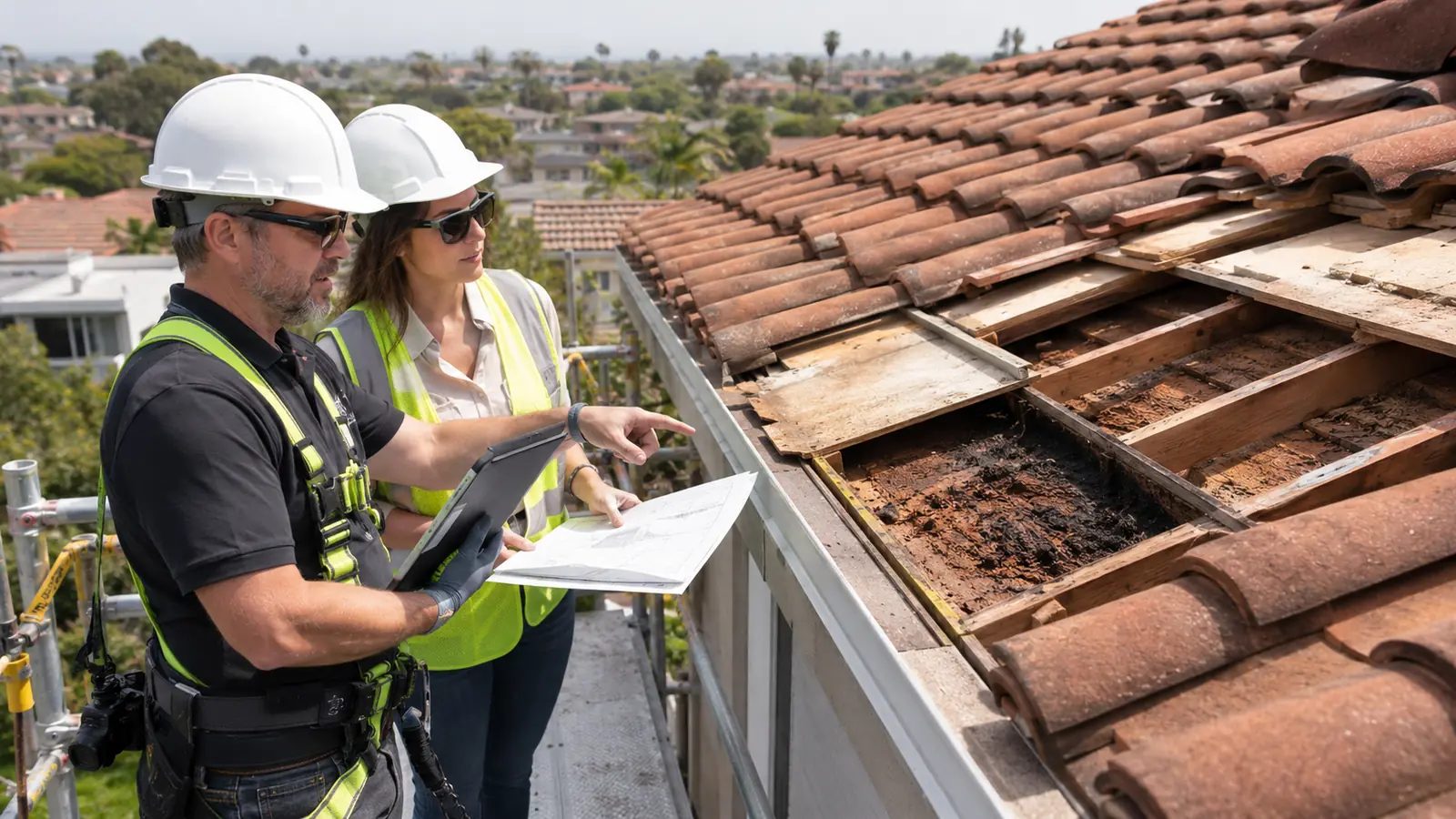
Tile Roof Inspection Documentation Property Managers Should Require
A useful inspection report should allow another contractor, board member, or adjuster to understand the condition without relying on verbal explanation. We require roof-area identification; overview and close-up photos; locations of cracked, slipped, missing, or poorly seated tiles; valley and flashing conditions; visible underlayment condition where safely accessible; prior patching; drainage restrictions; interior moisture locations; and a repair scope with quantities, materials, urgency, and limitations.
For multi-building communities, each roof plane should use a consistent label such as Building C–South Slope–Unit 14. Dated photos tied to those labels make recurring-leak analysis, budgeting, and warranty enforcement much easier.
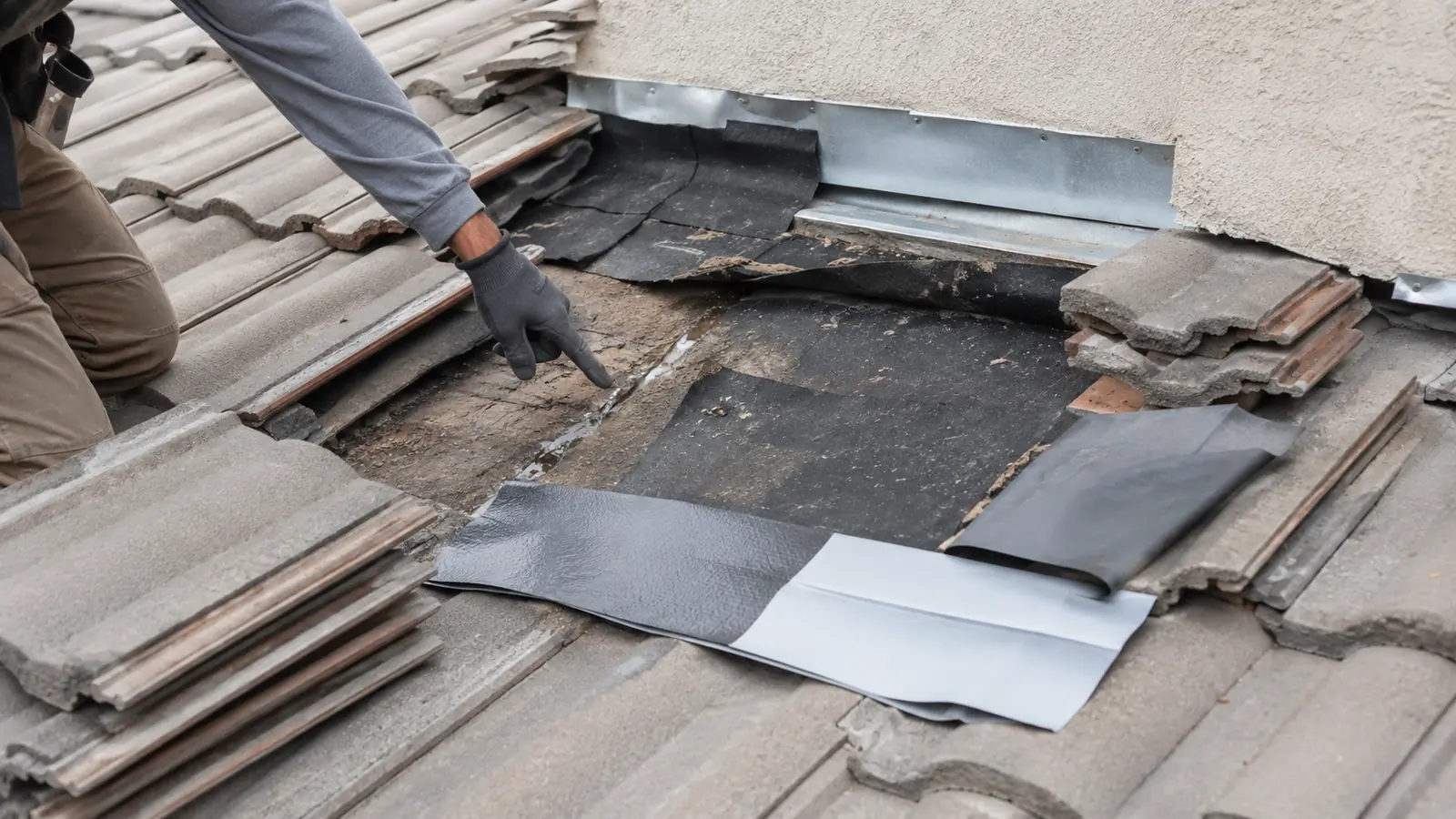
Repair the Water Path, Not Just the Visible Tile
A professional repair begins with controlled removal around the suspected failure. Tiles are lifted carefully, reusable pieces are staged, and the underlying assembly is inspected. If underlayment is torn, brittle, punctured, or improperly integrated with flashing, installing a new tile over it does not restore waterproofing.
Repairs may require localized underlayment replacement, corrected flashing laps, a rebuilt valley detail, new penetration flashing, fastener or batten repairs, and compatible replacement tiles. The repair must preserve drainage continuity; excessive roof cement should never substitute for properly integrated flashing.
Matching Clay and Concrete Roof Tiles in HOA Communities
For HOA properties, tile matching affects both performance and appearance. Before approving replacements, we verify material type, profile, dimensions, manufacturer when identifiable, color blend, texture, and fastening method. Managers should retain attic-stock or salvaged matching tiles when practical.
If an exact product is discontinued, the contractor should submit photos or samples before visible-area installation. Boards should review architectural standards and governing documents before approving substitutions on street-facing slopes. Tile harvesting from less-visible areas can sometimes preserve appearance if the donor area receives a technically compatible replacement.
HOA Responsibility, Approvals, and Repair Records
Before authorizing work, we identify whether the roof is association-maintained common area, owner responsibility, or governed by a project-specific allocation in the CC&Rs. California Civil Code §4775 provides a default framework under which an association is responsible for repairing, replacing, and maintaining common area unless the declaration provides otherwise. Governing documents therefore remain central to the approval path.
For non-emergency work, the board file should include findings, photographs, scope, required bids, funding source, warranty implications, and management recommendation. For associations meeting the statutory threshold, Civil Code §5550 also requires a visual inspection of accessible major components at least once every three years as part of reserve-study requirements. Emergency mitigation should still be documented at the time it occurs, even when immediate action is allowed under delegated authority.
San Diego Permit Checks Before the Repair Scope Expands
A localized repair can become a larger reroof or structural repair once tiles are removed. Managers should not assume the original work order determines permit requirements. San Diego’s roof-covering permit guidance distinguishes requirements by project scope and building conditions, while designated historical resources and properties in adopted historic districts receive additional scrutiny.
Vendor contracts should assign responsibility for identifying permit requirements before work expands. If deck or structural damage is discovered, we recommend a written change order with photos, measured quantities, revised price, and required permit or inspection steps before concealed work proceeds.
Preventative Maintenance for San Diego Tile Roof Portfolios
We recommend a documented roof review at least annually and after significant wind or rain events, with frequency adjusted for roof age, trees, coastal exposure, leak history, and rooftop traffic from HVAC, solar, or other trades. Maintenance should focus on broken or displaced tiles, valley debris, penetrations, flashing separation or corrosion, drainage paths, and signs of recurring moisture.
San Diego’s long dry periods can hide defects until sustained rain exposes them. We use service histories to flag repeat locations; multiple repairs in the same roof zone should trigger broader investigation rather than another isolated patch. Managers can also reference Tile Roofing Industry Alliance technical guidance for flashing, penetrations, ventilation interfaces, and other tile-system details.
Warranty Tracking and Vendor Communication
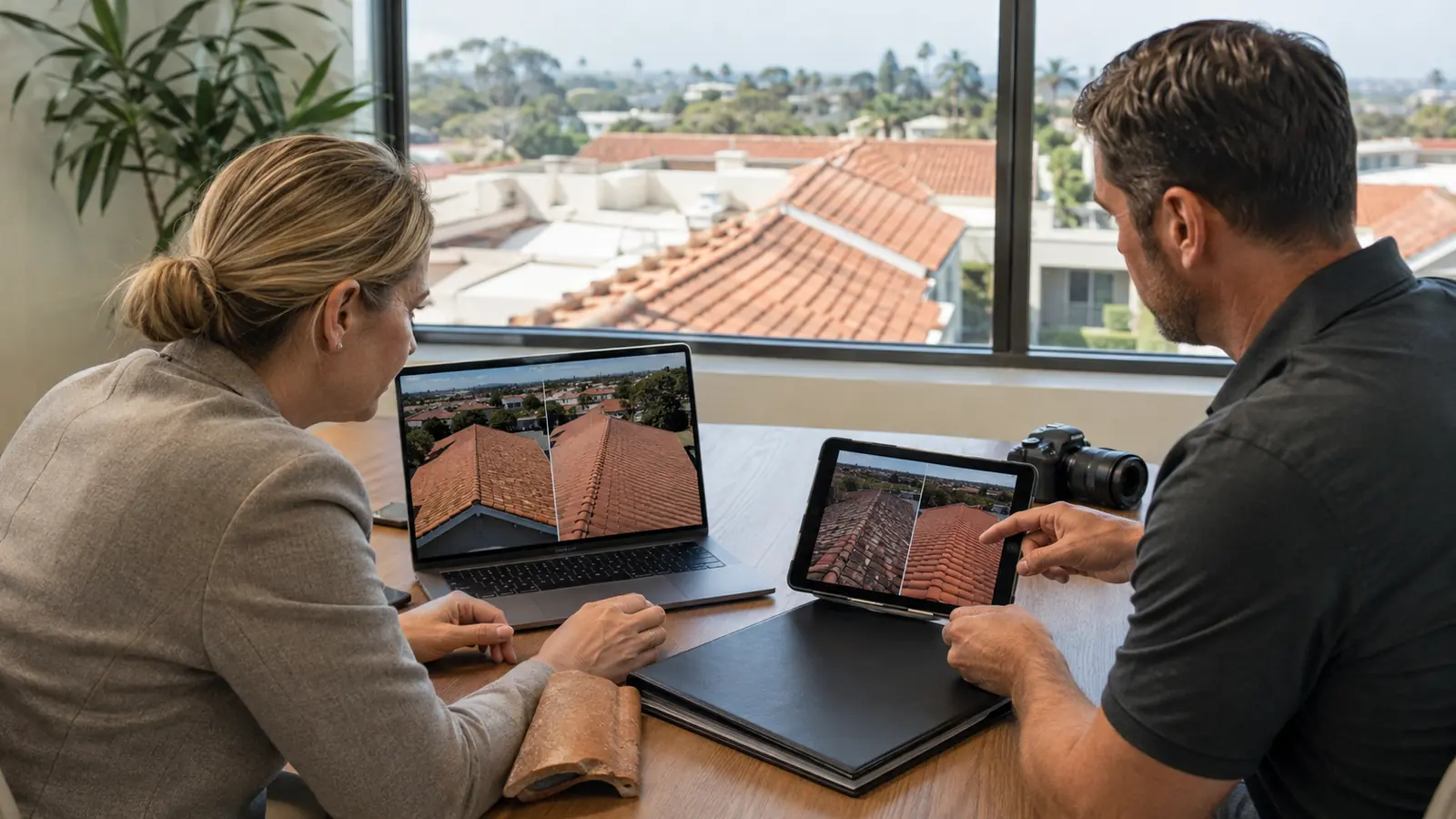
Every completed repair should produce a closeout package containing the final scope, before-and-after photos, invoice, materials, warranty terms, exclusions, permit documentation when applicable, and exact roof area repaired. We store warranties by building and roof zone, not only by vendor.
Vendor agreements should define emergency response, after-hours contacts, insurance and licensing requirements, resident-access rules, cleanup, tile-breakage responsibility, change-order authority, photo documentation, and workmanship warranty. At Tile Roofing San Diego, we favor one communication chain from manager or board representative to the contractor project lead, with tenant communication routed through management. This reduces unauthorized scope changes and disputes over approvals.
When Repeated Repairs Signal a Larger Roof-System Problem
One cracked tile does not justify major restoration. Repeated leaks across several roof planes, widespread underlayment brittleness, recurring flashing failures, extensive tile slippage, or expanding tear-back areas can show that isolated repairs are becoming inefficient.
At that point, managers should request a condition assessment separating serviceable tile from failing waterproofing components. A lift-and-relay approach may allow reusable tiles to be removed while underlayment and flashings are renewed. The decision should be based on documented condition, expected remaining service life, reserve planning, access complexity, and cumulative reactive-repair cost—not age alone.
CONCLUSION
Effective tile roof repairs in San Diego require disciplined triage, system-level diagnosis, precise documentation, controlled approvals, and long-term maintenance tracking. When we treat every leak as part of a managed roof history rather than an isolated service call, property managers and HOA boards gain faster emergency response, clearer budgets, stronger vendor accountability, better warranty protection, and fewer recurring failures.
FAQ
How quickly should a property manager respond to a reported tile roof leak?
An active leak should be triaged immediately, with life-safety concerns such as water near electrical fixtures, saturated ceilings, or falling materials addressed first. We then arrange temporary mitigation and roof inspection as conditions permit. Even after rainfall stops, the ticket should remain open until the entry source is identified, permanent repairs are complete, and interior impact is documented.
Should an HOA replace only broken roof tiles when a leak occurs?
Not automatically. Broken tile may be the obvious defect, while the waterproofing failure involves underlayment, flashing, valleys, penetrations, or drainage details. We recommend removing enough tile around the suspected source to inspect the underlying assembly and restoring every failed component in the water path before reinstalling compatible tile.
What records should an HOA keep after a tile roof repair?
We recommend retaining the leak report, inspection report, dated photographs, approved proposal, change orders, final invoice, material information, permit and inspection records when applicable, warranties, and before-and-after photos tied to a precise roof location. Over time, these records support reserve planning, warranty claims, recurring-leak analysis, insurance documentation, and future vendor decisions.