

For premium San Diego properties, a tile roof can become a major negotiating point long before escrow reaches the closing table. At Tile Roofing San Diego, we evaluate the entire roofing system—not merely the visible clay or concrete tiles—so sellers, buyers, real estate professionals, HOA boards, and property managers can understand the roof’s actual condition before financial decisions are made. A professional pre-sale tile roof inspection in San Diego should identify remaining serviceability, underlayment deterioration, broken tiles, flashing defects, moisture intrusion, and roof deck concerns while documenting those findings in a clear roof report.
California transactions make accurate property-condition information particularly important. The California Department of Real Estate explains that property disclosures address physical conditions and defects that may materially affect a property’s value or desirability. For a high-value home, unresolved roofing questions can therefore become inspection contingencies, repair requests, seller credits, delayed closings, or significant post-sale disputes.
Why Tile Roof Condition Matters Before a San Diego Home Sale
Tile roofs frequently look better from the street than they perform beneath the surface. Concrete and clay tiles are durable exterior components, but they are only one part of a layered roof assembly. Tiles shed most rainfall while underlayment, flashing, valleys, penetrations, deck materials, drainage details, and fastening systems work together to control water.
This distinction matters during a sale because attractive, intact-looking tile does not automatically mean the waterproofing components below it are in comparable condition. A buyer may see a visually impressive roof while an experienced inspector finds aged underlayment, deteriorated flashing, previous patchwork, slipped tiles, exposed fasteners, compromised valleys, or moisture damage around penetrations.
In San Diego communities such as La Jolla, Rancho Santa Fe, Carmel Valley, Point Loma, Del Mar, and surrounding HOA developments, roofing findings can carry substantial financial weight because matching specialty tile, accessing steep or complex roof sections, rebuilding flashing details, and performing a tile lift-and-relay can represent meaningful ownership costs.
Pre-Sale Tile Roof Inspection Checklist
A transaction-focused roof inspection should answer one fundamental question: what condition is the complete roofing system in today, and what work is reasonably foreseeable?
We examine the following areas.
1. Roof Tile Condition
Every accessible roof plane should be evaluated for:
- Cracked or broken clay and concrete tiles
- Missing or displaced tiles
- Slipped tiles caused by fastening failure
- Improper replacement tiles
- Chipped corners that expose underlying materials
- Previous sealant-based repairs
- Loose ridge, hip, rake, and field tiles
- Mortar or adhesive deterioration
- Mechanical damage from foot traffic or previous contractors
One isolated broken tile is different from widespread breakage. The inspection should identify not only the quantity of damaged tiles but also the pattern. Repeated breakage near HVAC equipment, solar installations, skylights, or service routes may indicate ongoing traffic-related damage rather than ordinary aging.
2. Underlayment Age and Condition
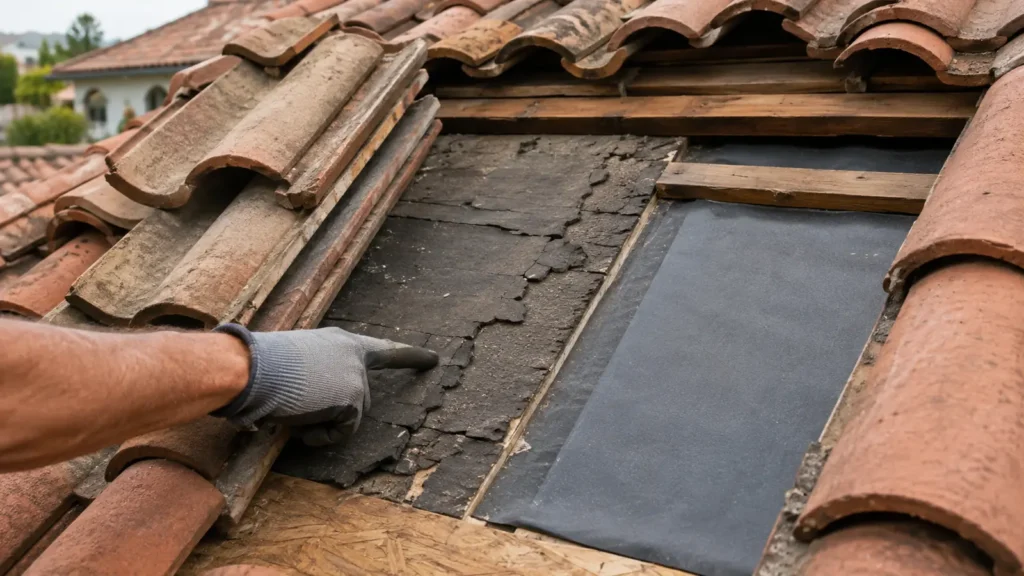
Underlayment is one of the most important findings in a pre-sale tile roof inspection because it is largely concealed during a normal visual review.
A tile roof can retain attractive, reusable tiles even when the underlayment beneath them has reached an advanced stage of deterioration. During an inspection, we look for clues such as exposed or brittle membrane at tile transitions, evidence from accessible repair areas, historical reroof information, interior moisture patterns, and the estimated installation date.
The Tile Roofing Industry Alliance installation guidance treats underlayment, flashing, valleys, roof preparation, penetrations, and tile attachment as interconnected elements of a properly installed tile roofing system. Its current concrete and clay roof tile installation guidance reflects modern installation requirements and details rather than treating tile as an isolated surface covering.
For buyers, the practical issue is not simply, “How old are the tiles?” It is, “How old is the waterproofing system beneath them?”
3. Flashing Around Roof Penetrations
Flashing defects are among the most consequential conditions we look for because leaks frequently develop at transitions rather than in the middle of an uninterrupted roof plane.
A pre-sale inspection should examine flashing around:
- Chimneys
- Skylights
- Plumbing vent pipes
- Exhaust vents
- HVAC penetrations
- Roof-to-wall intersections
- Sidewalls
- Headwalls
- Valleys
- Solar mounts
- Satellite or equipment attachments
We look for corrosion, displacement, improper laps, exposed fasteners, excessive roofing cement, failed sealants, poorly executed previous repairs, and flashing that may have been reused when other roofing work was completed.
Heavy reliance on mastic or caulk can be a warning sign. Sealant can serve specific roofing purposes, but it should not substitute for properly integrated flashing.
4. Valleys and Drainage Paths
San Diego receives far less annual rainfall than many U.S. markets, but concentrated winter storms can quickly expose drainage weaknesses. Valleys receive runoff from multiple roof planes, making deteriorated valley metal, accumulated debris, broken tile cuts, or poorly positioned tiles important inspection findings.
We also evaluate gutters, roof edges, drainage transitions, and areas where debris can collect beneath tile. Organic debris can retain moisture and interfere with intended drainage paths.
5. Roof Deck Condition
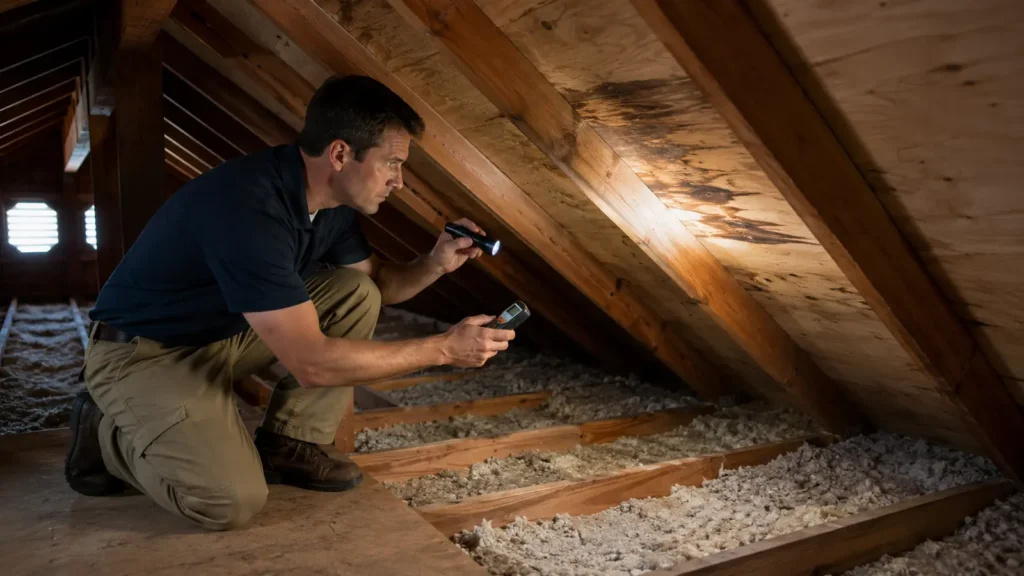
The roof deck forms the structural substrate beneath the roofing assembly. Because tile normally conceals it, deck problems may not be apparent from an exterior-only inspection.
Where attic or interior access is available, we look for:
- Water staining
- Darkened or deteriorated wood
- Delamination
- Soft or damaged sheathing
- Rusted fastener tips
- Evidence of recurring leaks
- Daylight through unintended openings
- Previous deck repairs
- Moisture around valleys and penetrations
Deck deterioration changes the scope of a roofing project. A transaction that appears to involve several broken tiles may become substantially different if water intrusion has damaged sheathing or structural wood beneath the roof.
6. Previous Repairs and Workmanship
Repair history can reveal as much as current damage.
We document mismatched tiles, patched underlayment, excessive mortar, incompatible replacement materials, unconventional flashing, abandoned penetrations, exposed fasteners, and repeated sealant applications. Multiple generations of localized repairs may suggest that an underlying problem has been repeatedly treated at the surface instead of corrected at its source.
A seller should know this before listing. A buyer should know it before the inspection contingency expires.
7. Attic Evidence of Roof Leakage
When accessible, the attic provides critical supporting evidence. Exterior roof defects do not always produce visible ceiling stains, particularly when small amounts of water travel along framing members or evaporate before reaching finished living areas.
We examine the underside of the deck, rafters, penetrations, insulation, and vulnerable transition areas for moisture staining or previous leak evidence.
The absence of an interior ceiling stain should never be treated as proof that a tile roof is leak-free.
8. HOA Roofing Responsibility
For condominiums, townhomes, planned developments, and communities with architectural restrictions, ownership responsibility should be established early.
Depending on the governing documents, responsibility for tile, underlayment, structural deck, flashing, gutters, or common-area roofing may belong to the homeowner, the HOA, or be divided between them.
Before negotiations rely on a roof finding, sellers, buyers, property managers, and association representatives should review applicable CC&Rs, maintenance responsibilities, architectural standards, and known association roofing projects.

What a Pre-Sale Roof Report Should Include
A useful tile roof inspection report for a San Diego real estate transaction should be specific enough that another party can understand the findings without standing on the roof.
We recommend documenting:
- Roof type and visible tile material
- Approximate roof or reroof age when verifiable
- General tile condition
- Broken, missing, or displaced tile locations
- Underlayment observations
- Flashing and penetration conditions
- Valley condition
- Roof edge and drainage issues
- Evidence of previous repairs
- Visible roof deck concerns
- Interior or attic leak evidence
- Photographs of material findings
- Immediate repair items
- Maintenance recommendations
- Conditions requiring further investigation
- Whether larger-scale rehabilitation should be considered
Reports should distinguish observed defects from anticipated future maintenance. That distinction prevents a minor repair item from being interpreted as complete roof failure while also preventing a cosmetically attractive roof from receiving an unjustifiably clean bill of health.
Tile Repair vs. Lift and Relay Before Selling
Not every inspection finding requires roof replacement.
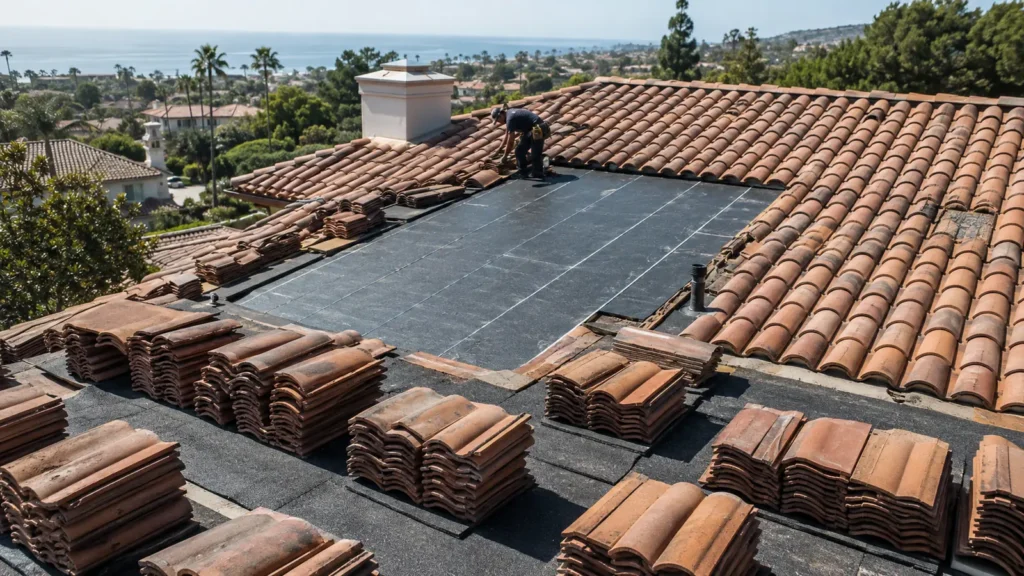
Localized tile damage, isolated flashing problems, or a small penetration leak may be repairable without disturbing most of the roof. Conversely, widespread underlayment deterioration beneath serviceable tiles can make a tile roof lift and relay more appropriate. During this process, reusable tiles are carefully removed and staged, deteriorated underlayment is removed, deck repairs are completed as necessary, new waterproofing and flashing components are installed, and suitable existing tiles are reinstalled.
A pre-sale inspection helps separate these fundamentally different scenarios before buyers and sellers begin negotiating from assumptions.
How Sellers Can Use a Roof Inspection Before Listing
A seller-initiated inspection can identify problems before the buyer’s inspector or roofing contractor discovers them under deadline pressure.
This creates an opportunity to obtain appropriate repairs, gather invoices and roofing history, determine whether underlayment deserves further investigation, and present buyers with organized documentation.
For premium homes, reducing uncertainty can be almost as important as repairing defects. Buyers may be more comfortable evaluating a documented roofing condition than confronting an unexplained roof with unknown age and maintenance history.
How Buyers Should Evaluate a Tile Roof During Escrow
Buyers should avoid relying exclusively on the visible appearance of tile or the general home inspection.
A roofing-focused inspection can clarify whether the buyer is inheriting several routine maintenance items or approaching a much larger waterproofing project. Particular attention should be paid to underlayment age, previous leaks, flashing workmanship, deck condition, repair history, and whether specialty tiles remain available for matching.
The objective is not to label every aging component a defect. It is to provide enough technical information for the buyer to evaluate future ownership costs realistically.
When to Schedule the Inspection
For sellers, the strongest timing is generally before listing or before substantial buyer negotiations begin. This allows repair decisions to be made without an escrow deadline.
For buyers, the inspection should occur early enough within the contractual inspection period to allow findings to be reviewed, additional evaluations to be requested when justified, and negotiations to proceed based on documented conditions.
Property managers and HOA representatives can also use pre-sale inspections when roof responsibility is disputed or when transaction findings could affect common-area maintenance planning.
Conclusion
A pre-sale tile roof inspection in San Diego should go far beyond counting broken tiles. The meaningful questions involve underlayment age, flashing integrity, drainage, previous repairs, hidden moisture, roof deck condition, HOA responsibility, and the probable scope of future work. By documenting these conditions before a real estate transaction reaches its most time-sensitive stage, we give sellers, buyers, property managers, and associations a clearer basis for repairs, disclosures, budgeting, and negotiations. When a tile roof could materially influence the value or terms of a premium San Diego property sale, scheduling a professional inspection before decisions are finalized is the most practical way to replace uncertainty with documented evidence.
FAQ
What should a pre-sale tile roof inspection include in San Diego?
It should evaluate roof tiles, underlayment indicators, flashing, valleys, penetrations, drainage, previous repairs, attic leak evidence, and accessible roof deck conditions. The final report should include photographs and clearly distinguish immediate defects from maintenance or longer-term roofing considerations.
Can a tile roof look good but still need major work?
Yes. Clay or concrete tiles may remain visually attractive and reusable while underlayment, flashing, or concealed deck materials deteriorate underneath. This is why judging a tile roof solely from street-level appearance can significantly underestimate its actual condition.
Should a seller repair tile roof problems before listing the home?
It depends on the inspection findings and transaction strategy. Correcting clearly defined localized defects before listing can reduce uncertainty, while significant underlayment or deck concerns may require broader evaluation before deciding between repair, buyer credit, negotiation, or a tile lift-and-relay project.