
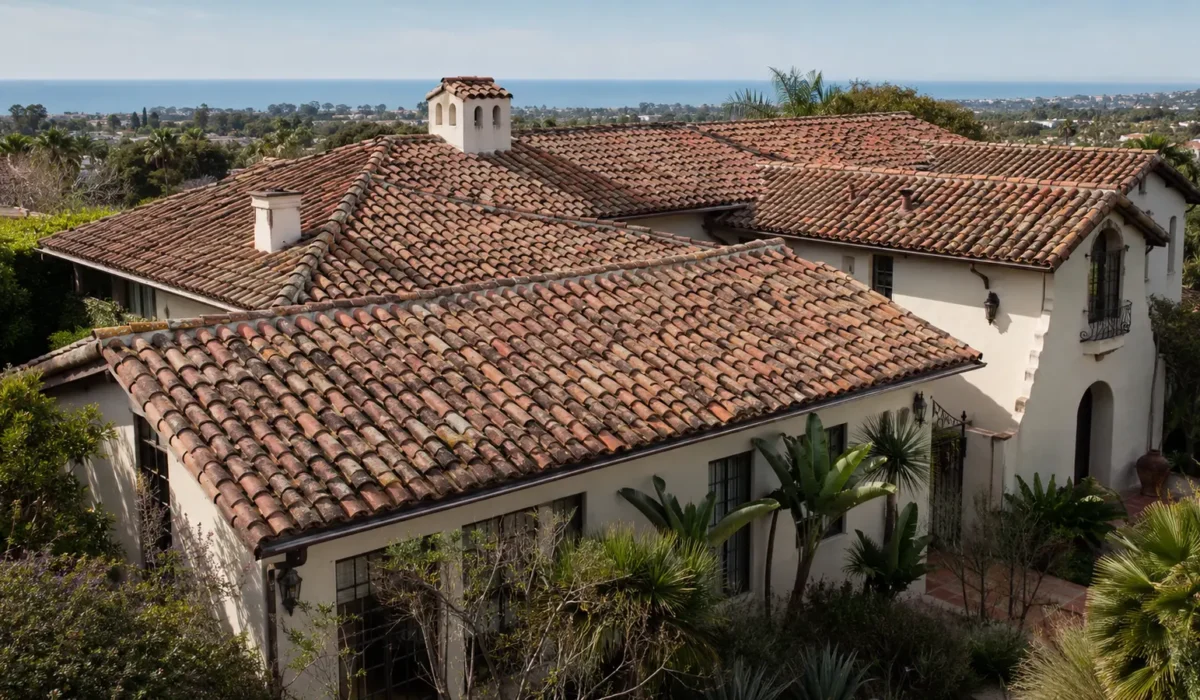
When an older clay tile roof needs repair, the hardest part may be finding a replacement tile that truly belongs on the roof. At Tile Roofing San Diego, we often encounter Spanish, Mission, barrel, and S-tile roofs where the original manufacturer has closed, the profile has been discontinued, or a current product carries the same name but no longer matches the original dimensions. In San Diego, a poor match can turn a sound repair into an obvious patch that affects architectural character, HOA approval, and future serviceability.
Why Discontinued Clay Roof Tiles Are Difficult to Match
A clay tile match is not simply a color match. We compare length, width, installed exposure, headlap, thickness, curvature, barrel diameter, taper, interlocking geometry, nail-hole position, hanging lugs, side locks, surface texture, and the way the tile seats against adjoining courses. Small dimensional differences can alter alignment, overlap, drainage, or the roof plane.
Color is equally complex. Historic clay develops variation through firing, mineral content, oxidation, dirt, and decades of weathering. A new terracotta tile that looks close in a catalog can appear much brighter beside 40-, 60-, or 80-year-old material.
That is why we treat discontinued tile matching as a material-identification problem first and a purchasing problem second.
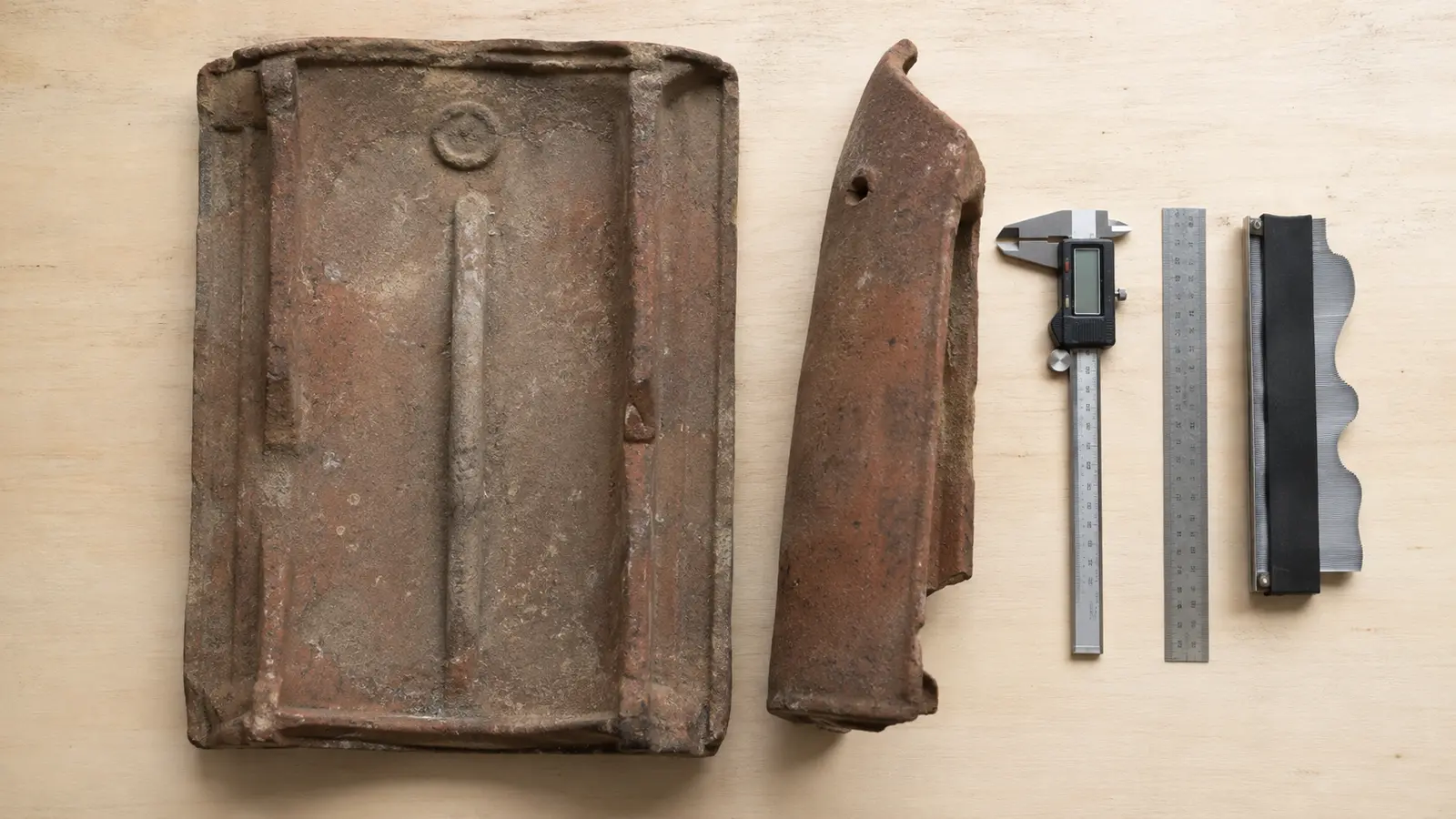
Start With Positive Identification of the Existing Tile
The best search begins with a complete sample. We carefully remove an intact tile from an accessible area and inspect the back for manufacturer stamps, profile names, plant marks, mold numbers, size codes, or patent information.
We then document exact dimensions. For Mission systems, we measure length, width, taper, curvature, and the radius of pan and cover pieces. For one-piece S tile, we record pan width, roll height, side-lock shape, water channels, nose profile, and fastening points. We photograph the face, back, side, nose, head, and interlock.
Searching by shape and color alone is unreliable; searching by stamp, geometry, dimensions, and profile is far more precise.
Functional Match vs. Visual Match
A replacement must do more than look similar. It must integrate without forcing, rocking, opening joints, reducing headlap, or interfering with drainage.
A tile that is slightly too wide can push adjacent pieces out of alignment. A narrow tile can create excessive side gaps. A different lug position may prevent proper seating, while a different nose height can create a visible step at the course line. With interlocking profiles, a side lock that “almost fits” is not a proper match.
We avoid grinding, forcing, or heavily modifying incompatible field tiles merely to fill an opening. The replacement must preserve support, fastening, drainage, and the intended overlap of the roof system.
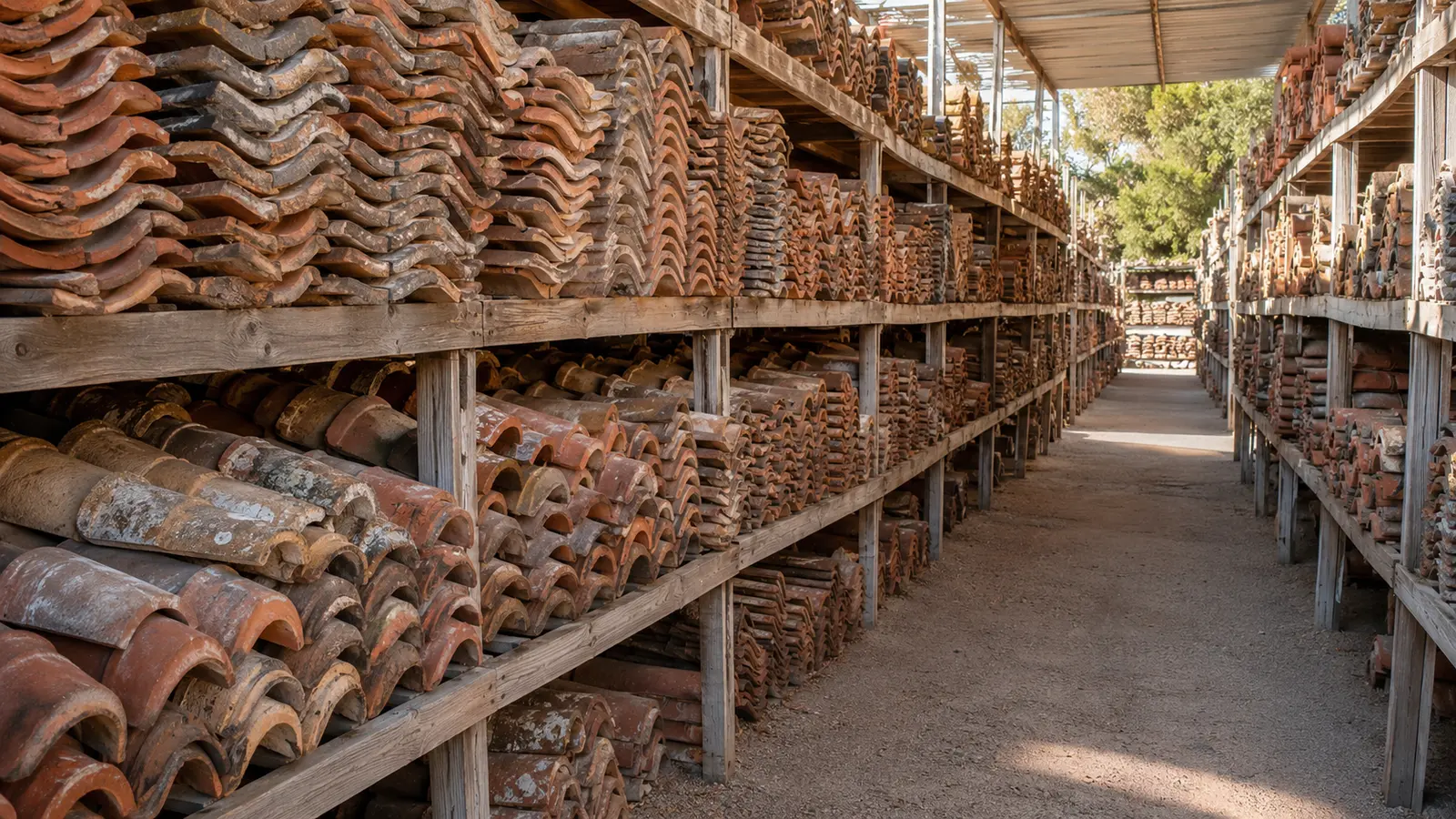
Search New-Old Stock and Salvaged Clay Tile
Once the tile is identified, the first objective is an exact legacy replacement. Sources may include attic stock, tiles retained by the original builder, discontinued distributor inventory, or reclaimed material removed from another roof.
Salvaged tile is especially valuable because age and weathering may make it visually closer to the existing roof than new production. Reclaimed pieces must still be inspected for hairline cracks, broken lugs, spalling, old mortar, enlarged nail holes, and hidden fractures.
The National Park Service guidance for historic clay tile roofs states that clay tile has one of the longest service lives among historic roofing materials—“generally about 100 years, and often several hundred.” It recommends retaining and reusing as much original tile as practical and recognizes salvaged and custom-made tile as replacement resources.
Use a Discontinued Tile Matching Hierarchy
For difficult San Diego restorations, we use a clear order of preference:
- Exact original tile from owner-held spare stock.
- Exact discontinued tile from new-old inventory.
- Sound salvage with the same manufacturer, mold, profile, and dimensions.
- A current tile produced from genuinely compatible tooling.
- Custom reproduction when quantity and project value justify it.
- Strategic relocation of original tile, with replacements placed in low-visibility areas.
- Roof-section or roof-wide replacement when a defensible match cannot be achieved.
Strategic Tile Relocation Can Preserve Visible Roof Planes
When exact inventory is limited, the roof itself may contain the best matching material. Original tiles from a rear slope, behind a chimney, or another low-visibility location can sometimes be moved to a prominent front elevation. Compatible replacement material is then installed where the difference is least noticeable.
The National Park Service specifically describes this approach for hard-to-match historic tile and warns that even replacement tile that initially matches may weather to a different hue over time.
This is particularly useful on Spanish Colonial, Mission Revival, Mediterranean, and custom clay roofs where the street-facing roof plane is a major architectural feature.
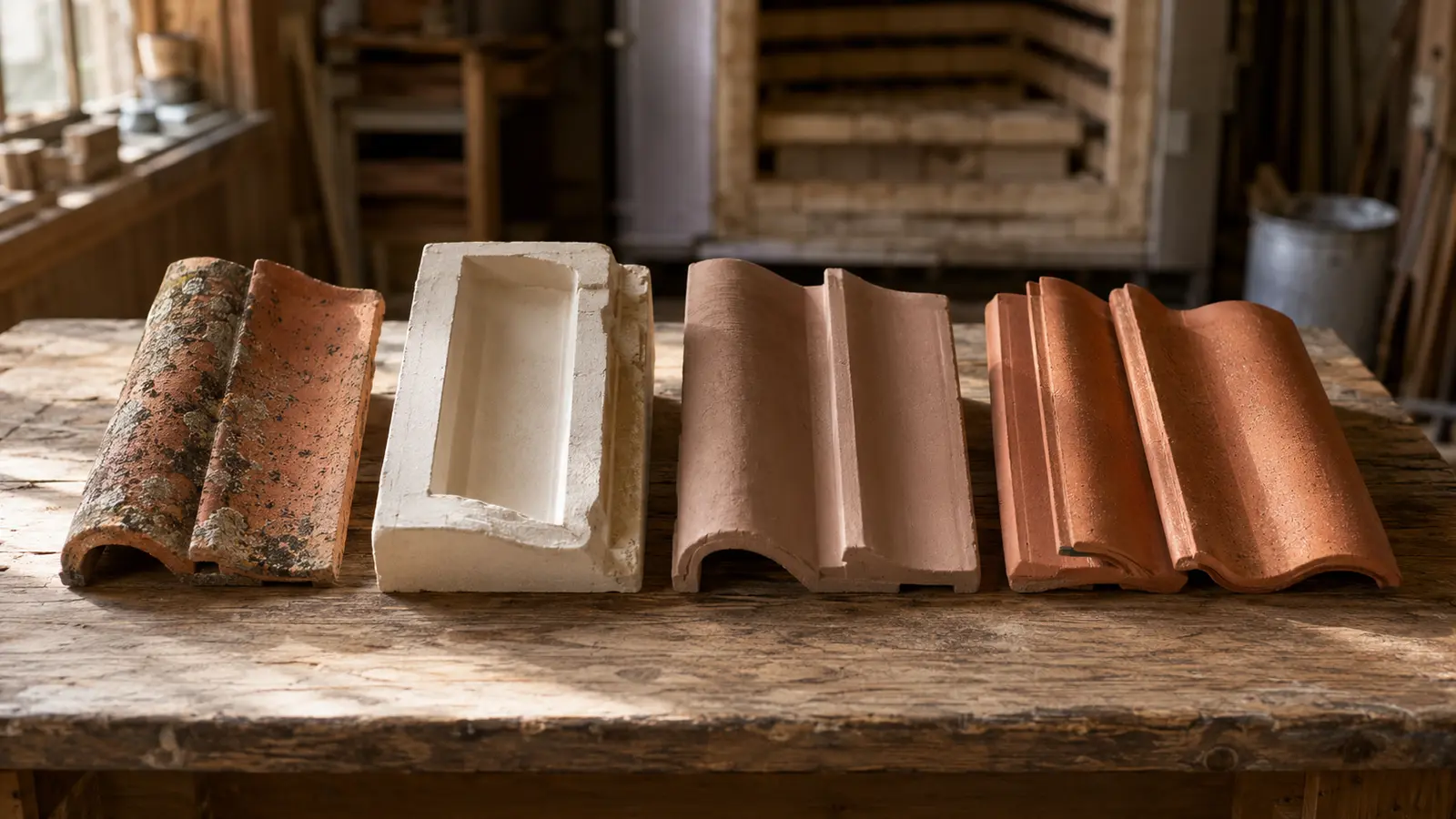
When Custom Clay Tile Reproduction Makes Sense
Custom reproduction becomes relevant when a roof has a rare profile, extensive damage, handmade characteristics, or architectural significance that makes substitution unacceptable. A specialty producer may reproduce a tile from an existing sample, surviving mold, measured profile, or newly created tooling.
We verify more than appearance: dimensions, overlap, exposure, fastening, weight, texture, color range, and compatibility with hips, ridges, rakes, bird stops, and specialty pieces. A custom field tile does not solve a restoration if discontinued trim components are also required.
For larger projects, a sample mockup viewed from ground level before production can confirm profile, exposure, and color blend.
Discontinued Tile Can Signal a Larger Roof Restoration Need
A broken tile may be the visible problem, but the repair decision must consider the complete assembly. Clay is the exterior covering; water management also depends on underlayment, flashings, valleys, penetrations, battens or direct-deck attachment, fasteners, and decking.
On older San Diego roofs, reusable clay can remain serviceable after concealed components have deteriorated. If leaks are widespread, fasteners are failing, underlayment is brittle, or flashings are deteriorated, repeatedly sourcing individual discontinued tiles may not address the underlying failure.
A lift-and-relay restoration may then be more appropriate. Existing tiles are removed, sorted, counted, staged, and mapped. Underlayment and flashings can be renewed before reusable original tile is reinstalled, with matching salvage or reproduction material reserved for shortages and breakage.
Inventory Control During a Lift and Relay
Rare tile should be treated as finite restoration material. Before removal, we estimate total tile count, existing damage, likely handling loss, and the number of replacements secured. Field tile, pan tile, cover tile, hip, ridge, rake, closure, cut pieces, and special transitions should be separated rather than piled together.
For blended roofs, we also document color distribution. Randomly reinstalling authentic tiles can still destroy the original blend. Photographs and location references help reproduce the roof’s established visual rhythm.
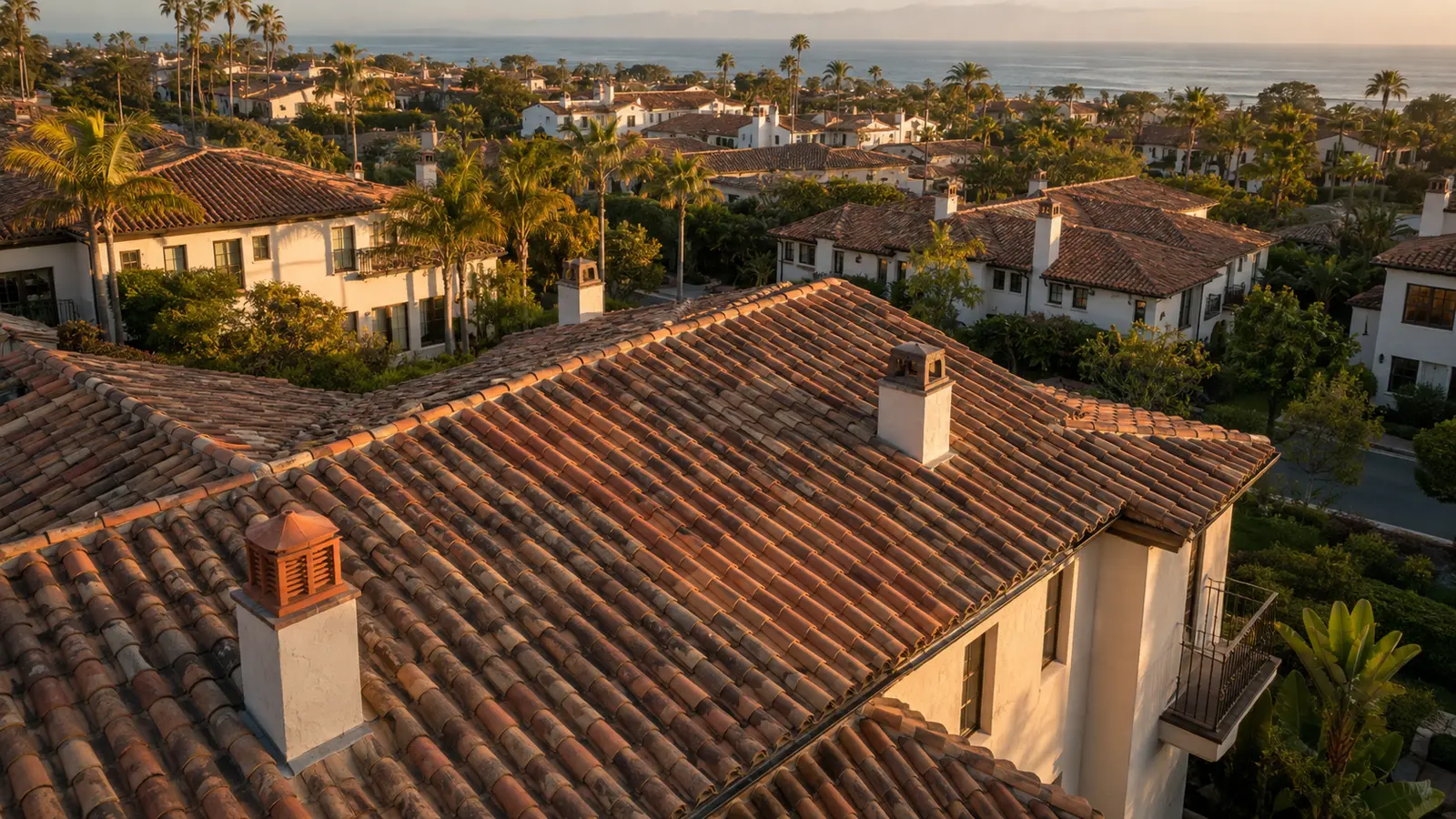
HOA Approval for Discontinued Roof Tile in San Diego
HOAs commonly regulate roofing color, profile, material, and visible consistency. When an exact tile is discontinued, the strongest architectural application is evidence-driven. We recommend submitting roof photographs, the tile’s back stamp, measured dimensions, confirmation of discontinuation, photographs or samples of the proposed match, and a placement plan showing where replacement tiles will appear.
The submittal should distinguish an exact replacement from salvage, custom reproduction, or a merely similar modern substitute. That distinction helps an architectural committee evaluate whether the repair preserves the community’s established appearance.
Where governing documents require architectural approval, California Civil Code § 4765 requires a fair, reasonable, and expeditious review procedure and decisions made in good faith rather than arbitrarily. Owners should still follow the association’s current application requirements before ordering material or starting visible work.
Conclusion
When clay roof tiles are no longer made, the right response is a disciplined matching and restoration process—not a rushed substitution. We identify the original profile, verify functional geometry, search legacy and salvage inventories, evaluate reproduction, relocate original tile strategically when appropriate, and coordinate the repair with the condition of the underlayment and flashing system. For San Diego homeowners, HOAs, and property managers, this protects water-shedding performance while preserving the architectural character that makes an older clay tile roof worth keeping.
Frequently Asked Questions
Can discontinued clay roof tiles still be matched?
Yes. Many discontinued tiles can be matched through owner-held spares, new-old stock, salvage inventories, compatible legacy molds, or custom reproduction. The best search uses the manufacturer stamp, profile, exact dimensions, interlock geometry, and photographs rather than color alone.
What if my HOA requires a tile that is no longer manufactured?
Document the discontinuation and submit the closest technically compatible restoration option with samples, measurements, photographs, and a placement plan. A strong application explains why the proposed material is the best available match and how visible differences will be minimized.
Should we replace the entire roof if matching clay tiles cannot be found?
Not automatically. A localized repair may still be possible through salvage, relocation, or reproduction. Full replacement becomes more reasonable when tile loss is extensive, compatible replacements cannot be sourced, or the roof also has systemic underlayment, flashing, fastening, or deck problems that make repeated spot repairs impractical.