
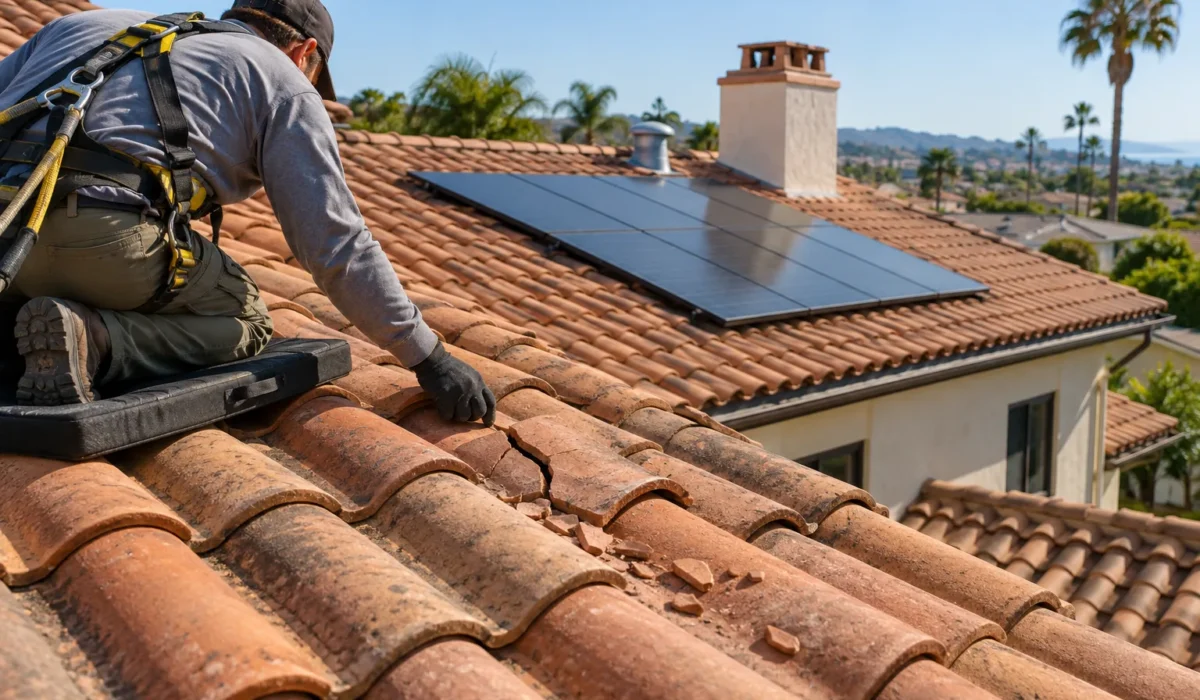
Tile roof walking damage is a common concern after solar installations, HVAC maintenance, chimney repairs, and pest control services. At Tile Roofing San Diego, we help homeowners, HOA boards, and property managers in San Diego, CA, identify cracked tiles, damaged flashing, and compromised underlayment caused by rooftop contractor activity. Even minor damage can lead to costly leaks when seasonal rainfall exposes vulnerable areas.
A professional tile roof inspection after contractor work helps detect hidden damage before moisture reaches the building interior.
Why Walking on Clay and Concrete Tile Roofs Causes Damage
Clay and concrete tiles are designed to withstand weather, but concentrated foot pressure can crack or displace individual tiles. Damage is especially likely when workers step on unsupported sections or carry heavy equipment across the roof.
The Tile Roofing Industry Alliance recommends avoiding unnecessary foot traffic and using appropriate protective methods when roof access is unavoidable.
Common types of contractor-related roof damage include:
- Cracked or broken clay and concrete tiles.
- Displaced tiles and loose ridge caps.
- Damaged flashing around vents and equipment.
- Torn or exposed roofing underlayment.
- Improperly sealed roof penetrations.
- Loose fasteners and obstructed drainage channels.
Some defects remain invisible from the ground until leaks develop.
Solar Panel Installation: Broken Tiles and Roof Penetrations
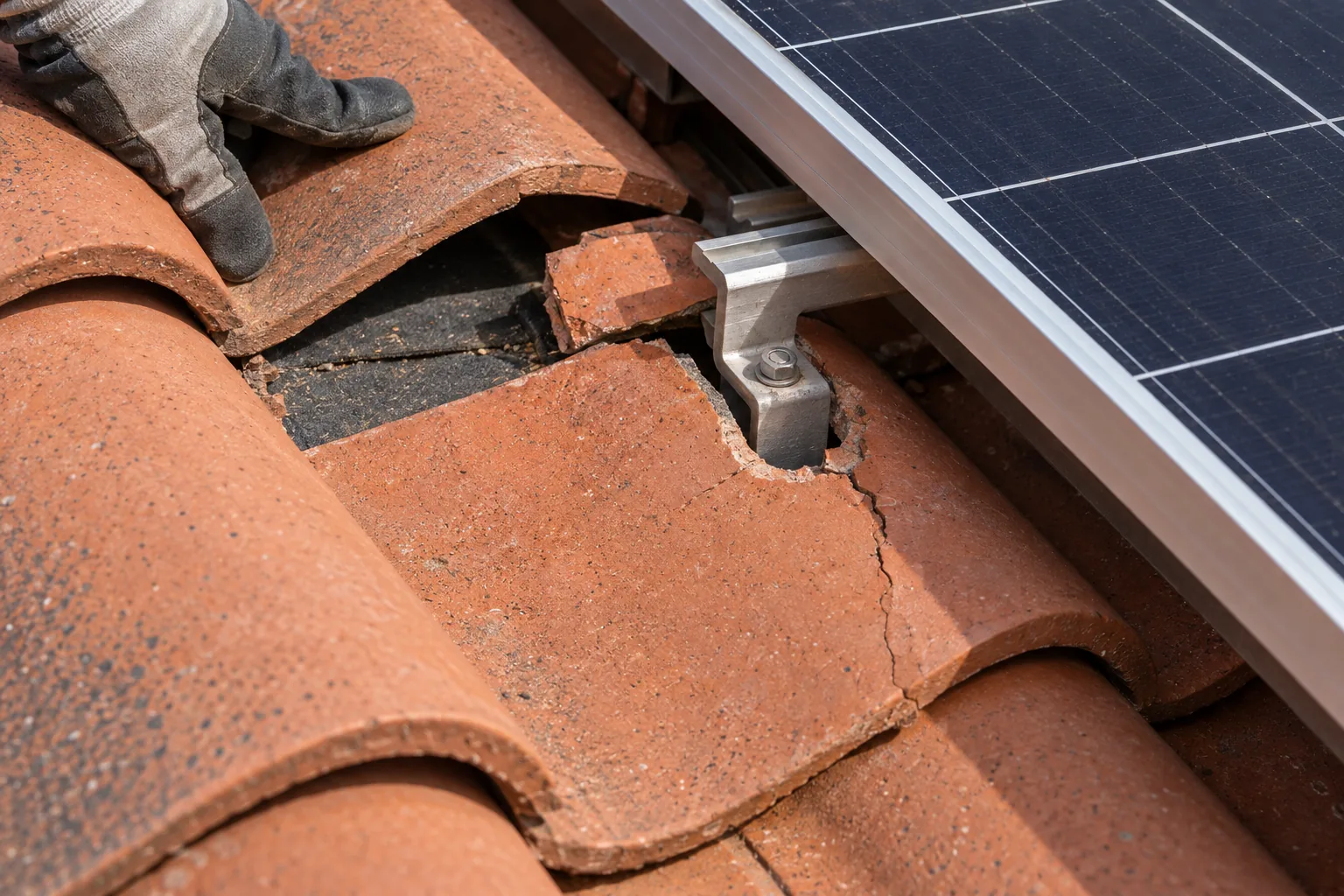
Solar installation requires repeated roof access, tile removal, and mounting hardware installation. Improper techniques can compromise the roofing system.
Typical solar installation damage includes:
- Cracked tiles beneath or around solar panels.
- Improperly cut tiles surrounding mounting brackets.
- Poorly flashed roof attachments.
- Exposed underlayment near mounting locations.
- Displaced tiles that create gaps beneath solar arrays.
Solar mounting systems must preserve both tile-level water shedding and the underlying waterproofing system.
We recommend inspecting tile roofs before and after solar installation, particularly on older San Diego properties where underlayment may already be deteriorating.
HVAC Contractors: Damaged Tiles and Vent Flashing
HVAC technicians frequently access rooftop condensers, ventilation systems, and mechanical equipment. Heavy tools, replacement components, and repeated foot traffic can damage nearby tiles.
Equipment replacement can also disturb flashing around duct penetrations, ventilation pipes, and mounting platforms.
We inspect these areas for cracked tiles, loose components, damaged flashing, and signs of water intrusion.
For HOA-managed buildings, post-maintenance inspections help document roof conditions following major mechanical repairs or equipment replacement.
Chimney Repairs: Broken Tiles and Flashing Problems
Chimney maintenance requires contractors to work around one of the roof's most vulnerable waterproofing transitions.
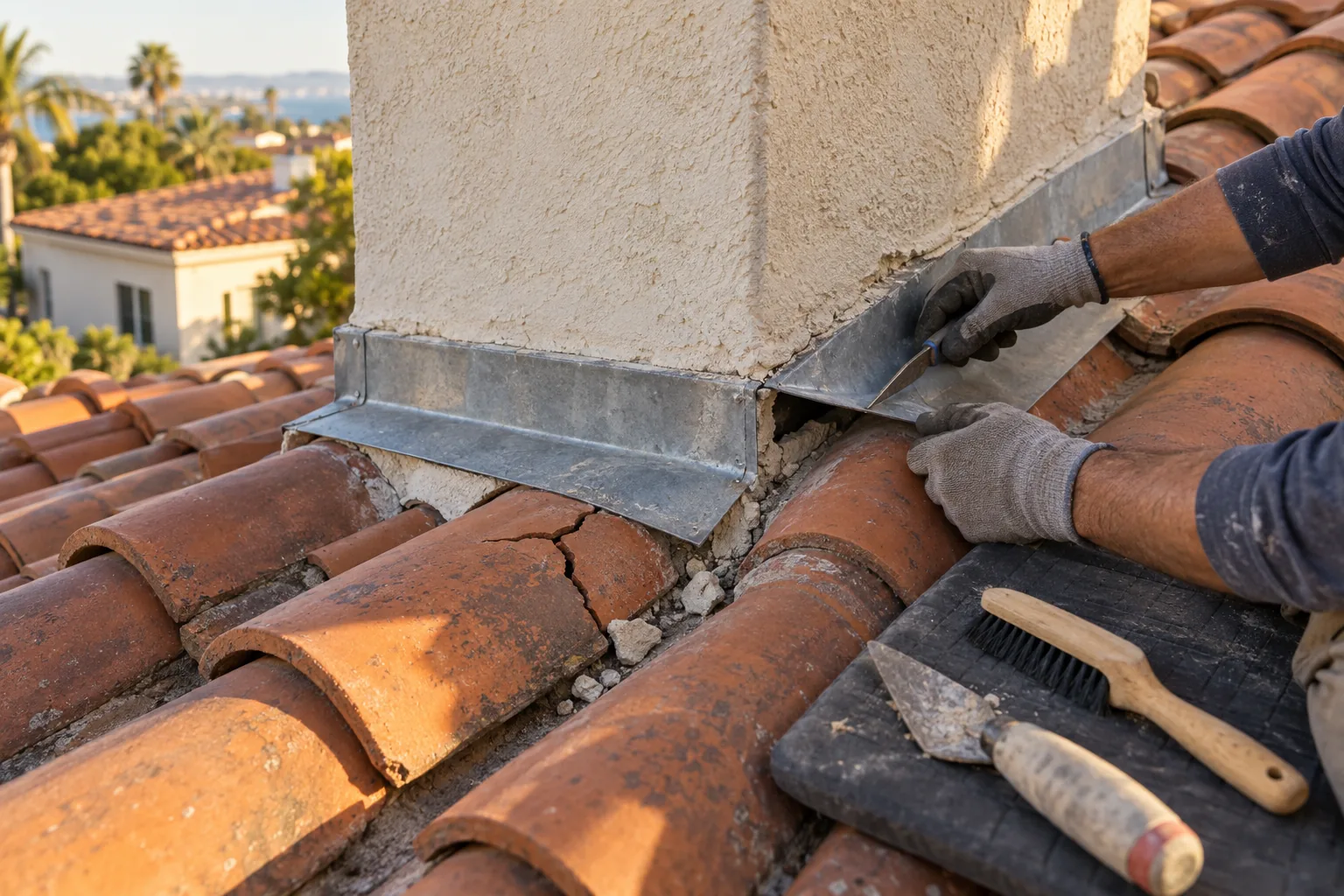
Walking near chimney structures or moving masonry equipment can fracture surrounding tiles. Flashing may also become loose or damaged during chimney repairs.
Common problems include:
- Cracked tiles around chimney bases.
- Displaced apron or counterflashing.
- Mortar debris blocking drainage.
- Gaps where roofing materials meet masonry.
Because San Diego experiences extended dry periods, chimney-related leaks may remain unnoticed until winter rainfall.
A targeted inspection after chimney work helps identify these vulnerabilities before interior water damage develops.
Pest Control Contractors: Eave Damage and Displaced Tiles
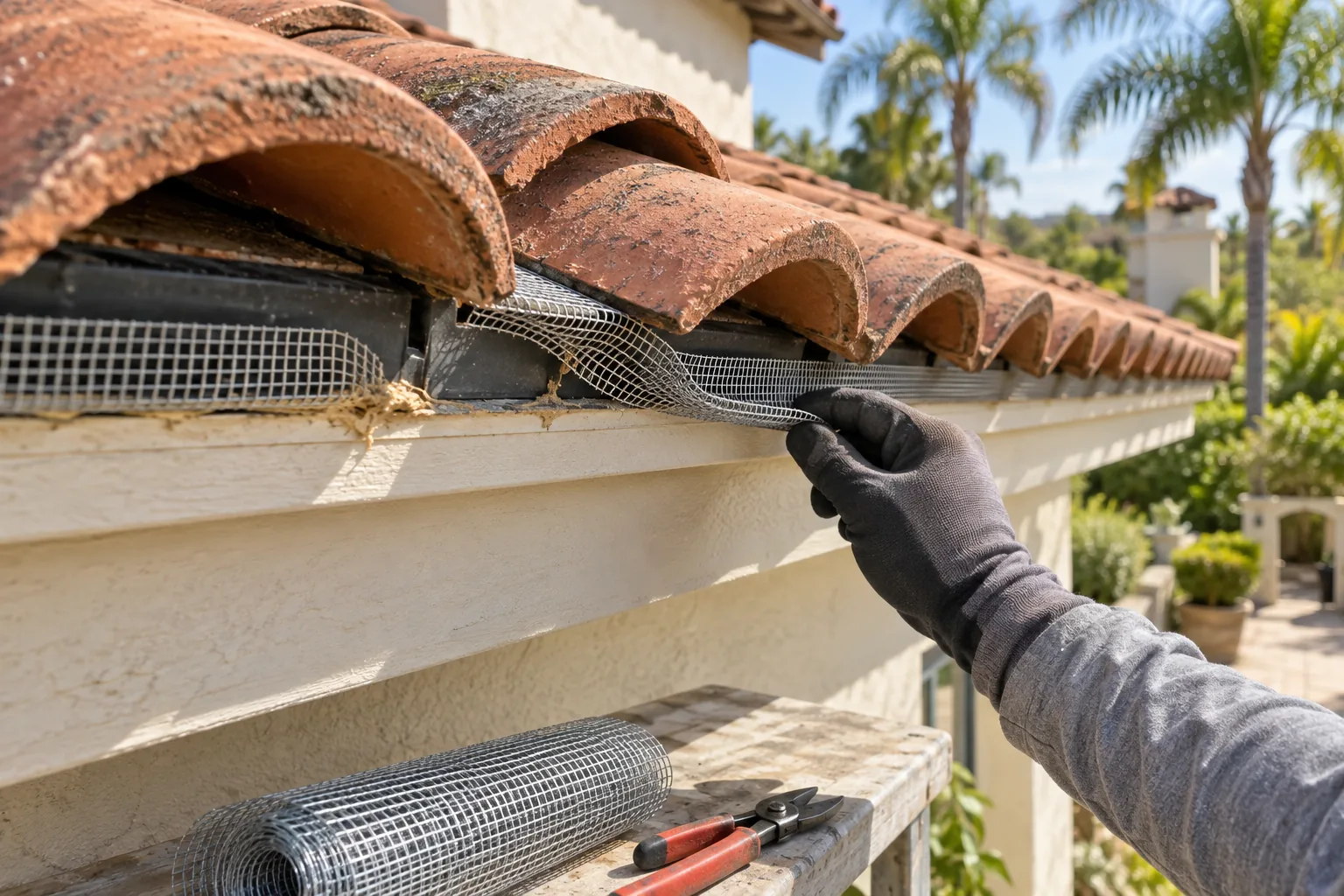
Pest control companies often access roof edges, attic vents, and openings beneath clay barrel or concrete tiles.
Improper exclusion work can damage bird stops, displace tiles, block drainage openings, or interfere with roof ventilation.
Poorly attached screening and excessive sealant may also prevent water from draining correctly.
We recommend inspecting roof edges and modified openings after pest exclusion work to ensure roofing materials remain properly secured and functional.
Why Contractor Damage Is Especially Important in San Diego
San Diego's coastal environment can worsen existing roofing vulnerabilities.
Salt-laden air in La Jolla, Coronado, Del Mar, Encinitas, and Oceanside may accelerate corrosion of exposed metal components. Santa Ana winds can further displace tiles that were loosened during contractor activity.
Meanwhile, prolonged sun exposure can deteriorate exposed or aging underlayment.
A small defect created during summer rooftop work may not become apparent until winter storms arrive.
Early detection is essential for protecting tile roofs from preventable water intrusion.
HOA and Property Manager Roof Protection Checklist
HOA boards and property managers should establish consistent roof access procedures whenever third-party contractors work on shared roofing systems.
We recommend the following precautions:
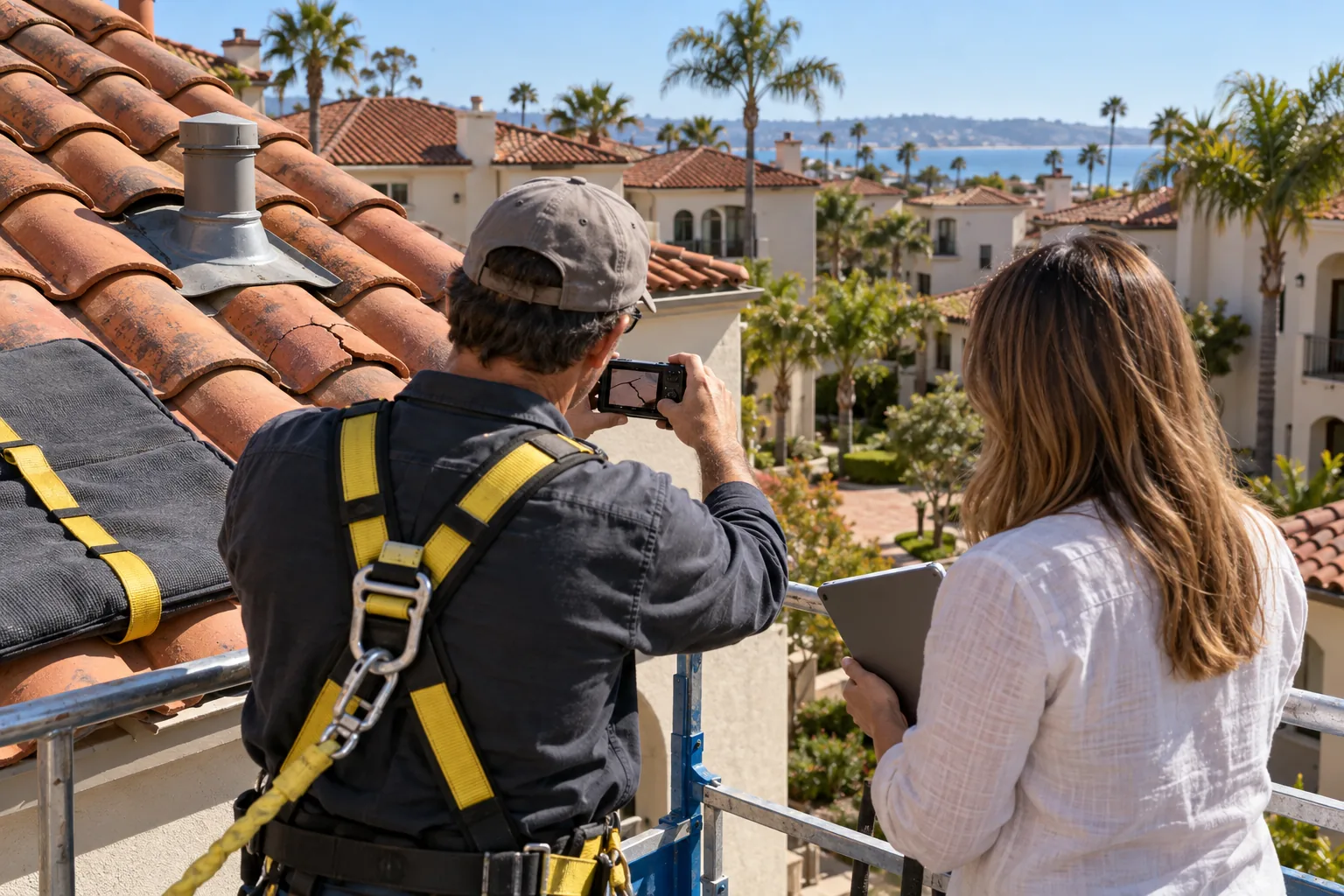
- Document roof conditions before work. Take dated photographs of existing tiles and flashing.
- Verify contractor qualifications. Check applicable licensing and insurance through the California Contractors State License Board.
- Require appropriate roof protection. Contractors should use safe access methods that minimize tile damage.
- Record completed work. Maintain contractor information, service dates, and affected roof sections.
- Schedule a post-work inspection. Identify newly damaged tiles, flashing, or penetrations.
- Keep inspection reports. Preserve documentation for maintenance planning and potential contractor disputes.
Pre-existing cracks and deterioration should be distinguished from newly identified defects before determining responsibility.
Signs You Need a Tile Roof Inspection After Contractor Work
After rooftop service, property owners should watch for:
- Broken tile fragments in gutters or on the ground.
- Newly cracked, missing, or shifted tiles.
- Uneven tile alignment near serviced equipment.
- Loose flashing or exposed mounting hardware.
- Water stains on ceilings or attic surfaces.
- Leaks following the first rainfall after contractor work.
However, not all tile roof walking damage is visible from the ground. We recommend professional evaluation after substantial rooftop activity, especially when contractors removed tiles or installed new penetrations.
Homeowners should never climb onto a tile roof to investigate suspected damage themselves.
Professional Tile Roof Inspections and Repairs in San Diego
A post-contractor tile roof inspection should evaluate both visible tile damage and the underlying waterproofing components.
We examine accessible roof sections for fractured tiles, disturbed flashing, improperly restored penetrations, drainage problems, and exposed underlayment.
Depending on the findings, repairs may involve replacing individual tiles, correcting flashing details, repositioning displaced materials, or restoring damaged underlayment.
For HOA boards, commercial property managers, and homeowners, professional inspections provide documented findings that help prioritize repairs and protect roofing investments.
Schedule a professional tile roof inspection with Tile Roofing San Diego after solar, HVAC, chimney, or pest control work to identify potential damage before it develops into a larger roofing problem.
Conclusion
Solar installers, HVAC technicians, chimney specialists, and pest control contractors can unintentionally damage clay and concrete tile roofs through foot traffic, equipment handling, and improper modifications. Cracked tiles, damaged flashing, and compromised underlayment can lead to leaks long after work is completed.
For San Diego homeowners, HOA boards, and property managers, documenting roof conditions and scheduling post-contractor inspections helps identify damage early, protect existing roofing materials, and reduce preventable repair costs.
Frequently Asked Questions
1. Can contractors damage a tile roof simply by walking on it?
Yes. Concentrated foot pressure can crack or displace clay and concrete tiles, especially when workers step on unsupported areas. Heavy equipment and repeated movement increase the risk.
2. Should an HOA inspect tile roofs after solar or HVAC installation?
Yes. A professional post-installation inspection can identify cracked tiles, damaged flashing, and improperly sealed penetrations. It also provides documentation for future maintenance and potential contractor-related claims.
3. Who pays for tile roof damage caused by contractors?
Responsibility depends on the contract terms, evidence, applicable law, and insurance coverage. Before-and-after photographs and an independent roof inspection can help establish whether damage occurred during the contractor's work.