
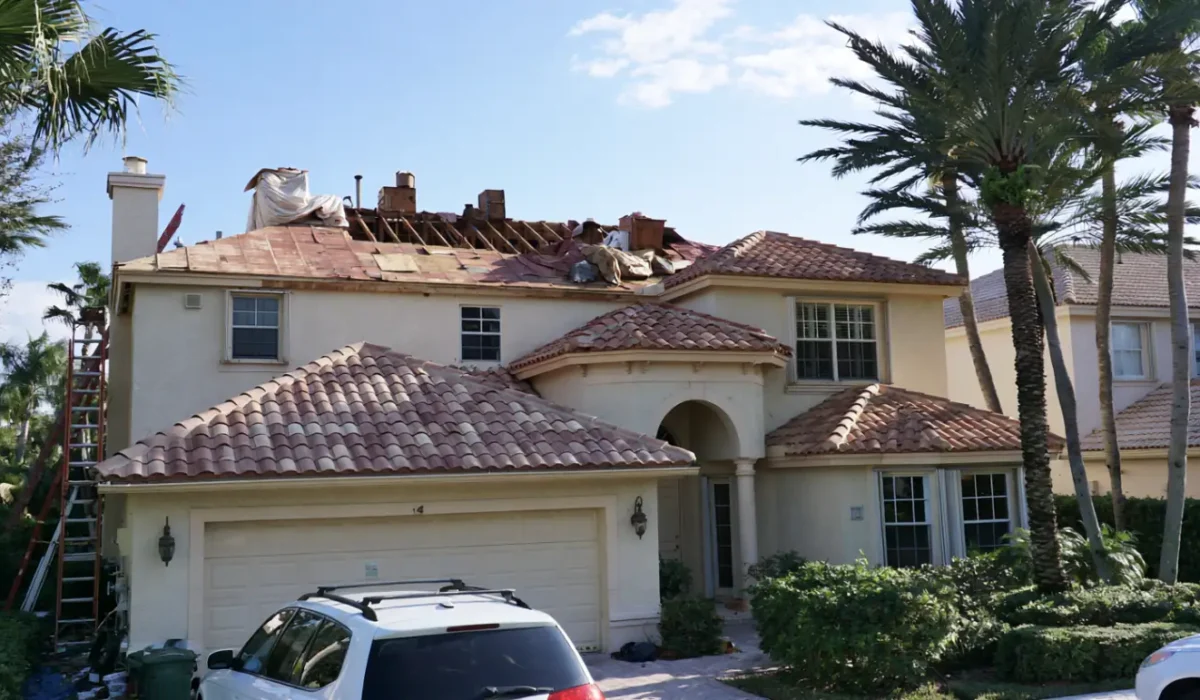
Tile Roofing San Diego helps homeowners, HOA boards, and property managers determine whether an aging tile roof requires new waterproofing beneath reusable tiles or a completely new tile roof system. The financial difference can be substantial: a lift and relay preserves serviceable clay or concrete tiles while replacing the underlayment, flashings, and damaged components, whereas full replacement removes the entire existing assembly and installs new tile. The right decision depends on roof area, tile condition, breakage rate, underlayment age, structural requirements, product availability, HOA standards, and the amount of hidden deck damage.
For 2026 planning purposes, a San Diego tile roof lift and relay commonly falls between $7 and $11 per square foot of roof area, while a full new tile installation may range from approximately $13 to $28 per square foot. Concrete tile normally occupies the lower-to-middle portion of the full replacement range, while premium clay and two-piece mission tile can reach or exceed the upper end. These are budgeting ranges rather than fixed prices; roof pitch, access, staging, solar equipment, valleys, tile profile, and deck repairs can materially change the final contract amount.
Quick Lift and Relay vs Full Tile Replacement Cost Comparison
| Project scope | Typical planning range | Approximate cost for a 2,500 sq. ft. roof |
| Lift and relay existing tile | $7–$11 per sq. ft. | $17,500–$27,500 |
| Full concrete tile replacement | $13–$20 per sq. ft. | $32,500–$50,000 |
| Full clay tile replacement | $16–$28+ per sq. ft. | $40,000–$70,000+ |
| Premium two-piece mission tile | $18–$30+ per sq. ft. | $45,000–$75,000+ |
A lift and relay may therefore reduce the initial project budget by 30% to 55% compared with installing all-new tile. The percentage depends on what is included in each proposal. A low lift-and-relay estimate that excludes flashing replacement, replacement tiles, deck repair, permits, or solar work is not directly comparable with a comprehensive full replacement proposal.
Roof area must also be distinguished from interior living area. A 2,000-square-foot home may have a considerably larger roof surface after accounting for slope, overhangs, garages, porches, attached structures, and architectural transitions. Accurate comparisons begin with measured roof squares, with one roofing square equal to 100 square feet.
Contact Us
What a Tile Roof Lift and Relay Includes
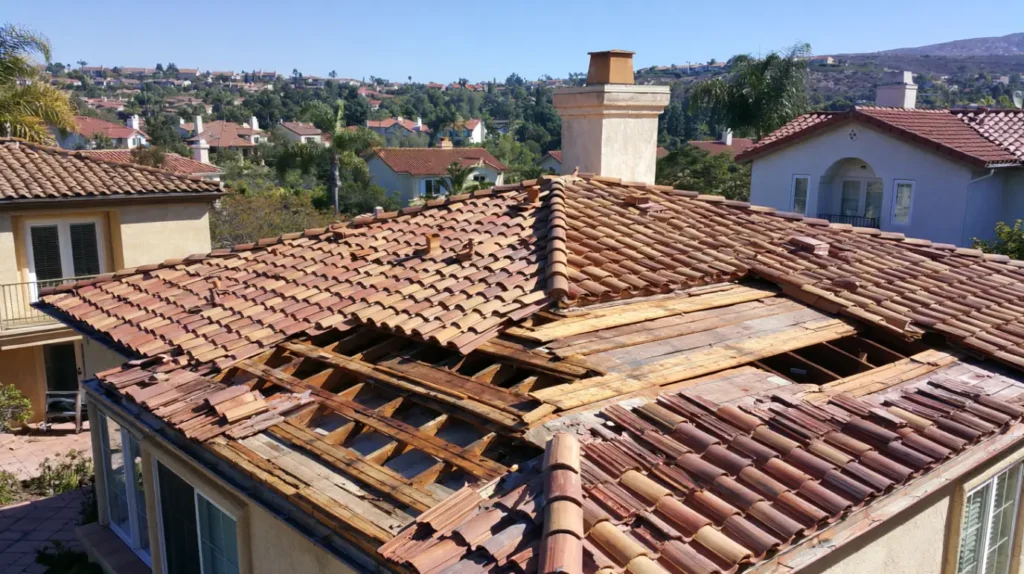
A lift and relay is a systematic tile roof underlayment replacement, not a small repair. We carefully remove the existing field tiles, stage reusable pieces, expose the old waterproofing system, remove deteriorated underlayment, inspect the roof deck, install new waterproofing and flashings, and reset the original tiles.
A properly scoped lift and relay normally includes:
- Controlled removal and staging of existing concrete or clay tiles
- Disposal of failed underlayment, old metal, fasteners, and debris
- Inspection of plywood, plank decking, skip sheathing, and framing transitions
- Replacement of deteriorated roof deck sections under an agreed allowance
- New underlayment selected for the roof slope and tile system
- New valley metal, edge metal, pipe flashings, wall flashings, and penetration details
- Replacement or correction of battens where the installation uses a batten system
- Reinstallation of serviceable field, ridge, hip, rake, and trim tiles
- New matching tiles for pieces broken before or during the work
- Mortar, adhesive, mechanical fastening, bird stops, and closure components where required
- Cleanup, haul-off, final inspection, and warranty documentation
The tiles remain a visible weather-shedding layer, but the new underlayment and correctly integrated flashings provide the primary secondary-water barrier when wind-driven rain passes beneath the tile. That is why a roof can leak even while most tiles still appear intact from the ground.
What Full Tile Roof Replacement Includes
Full tile roof replacement contains many of the same labor-intensive steps as a lift and relay, but the existing tile is removed from service rather than reused. The contractor must purchase, deliver, distribute, cut, fasten, and detail an entirely new tile system.
A comprehensive replacement scope may include:
- Removal and disposal of all existing roof tiles
- Removal of old underlayment, flashings, battens, and accessories
- Roof deck and structural repairs
- New underlayment and sheet-metal components
- New concrete, clay, lightweight, or specialty tile
- New ridge, hip, rake, starter, closure, and ventilation components
- Freight, rooftop loading, staging, and tile distribution
- Structural evaluation when tile weight or roof loading changes
- HOA sample approval and architectural documentation
- Manufacturer-specific installation and warranty requirements
New tile material, freight, disposal weight, and additional installation labor explain much of the cost gap. Full replacement may also require longer lead times when a particular color, blend, profile, or specialty accessory is not locally stocked.
Why Reusing Existing Tile Can Save So Much
Many San Diego tile roofs have two different aging cycles. The exposed concrete or clay tile may remain serviceable for decades, while the underlayment beneath it becomes brittle, punctured, displaced, or deteriorated sooner. When that occurs, replacing the waterproofing without discarding sound tile can preserve a large portion of the roof’s material value.
The savings do not come from eliminating labor. A lift and relay still requires crews to handle nearly every tile at least twice—once during removal and again during reinstallation. The savings come primarily from avoiding the purchase and disposal of thousands of new and old tiles.
For example, a 2,500-square-foot roof may contain several thousand individual pieces depending on the tile’s exposure and profile. Eliminating the cost of a complete new tile package, freight, accessories, and heavy debris disposal can produce a five-figure difference.

The Cost of Replacement Tiles During a Lift and Relay
No responsible lift-and-relay budget assumes that 100% of the existing tile will be reusable. Some tiles may already be cracked, chipped, spalled, improperly cut, poorly fastened, or hidden beneath mortar repairs. Additional breakage can occur during careful removal because older clay and concrete tiles may become brittle.
For a roof in good condition, we may establish a replacement allowance of approximately 5% to 15% of the field tile quantity. Roofs with fragile clay, discontinued profiles, extensive prior foot traffic, incompatible repairs, or widespread surface deterioration may require a larger contingency.
The replacement-tile budget depends on three questions:
- Is the existing profile still manufactured?
- Can reclaimed matching tile be sourced in sufficient quantity?
- Will the HOA accept a close blend when an exact match is unavailable?
A low-cost lift and relay can lose part of its advantage when 20% to 30% of the tiles require replacement and matching pieces are scarce. At that point, the owner should compare the revised relay cost with the long-term value of installing a uniform new system.
Sample Cost Scenarios for San Diego Tile Roofs
Scenario 1: Reusable Concrete S-Tile
Consider a moderately pitched 2,500-square-foot concrete tile roof with accessible staging, limited deck damage, no solar panels, and approximately 10% expected tile replacement.
- Lift and relay: $20,000–$27,500
- Full concrete tile replacement: $35,000–$47,500
- Potential initial savings: $15,000–$25,000
A lift and relay is financially compelling when the concrete tile remains structurally sound, the profile can be matched, and the owner wants to preserve the existing appearance.
Scenario 2: Brittle or Discontinued Clay Tile
Consider a 2,500-square-foot clay roof with complex hips and valleys, brittle trim pieces, previous patching, and a discontinued color blend.
- Lift and relay with high replacement allowance: $27,500–$40,000
- Full standard clay replacement: $42,500–$65,000
- Potential initial savings: $10,000–$30,000
The lift and relay may still cost less, but the risk of mismatched replacement pieces, future tile failures, and change orders becomes more significant. Full replacement may create better long-term value even though the initial price is higher.
Scenario 3: HOA Community Requiring Uniform Appearance
Consider a townhome association with repeated roof sections and strict architectural standards. The existing tile remains available, but some buildings have much higher breakage rates than others.
A pilot lift and relay on one representative building can establish:
- Actual tile recovery percentage
- Average deck repair per roofing square
- Production rate and staging requirements
- Replacement-tile availability
- Landscaping and access protection costs
- Realistic contingency for remaining phases
This approach gives the board better reserve projections than applying a generic per-unit price across buildings with different roof geometry and exposure.
Cost Factors That Affect Both Options
Roof Pitch and Complexity
A simple gable roof is less expensive than a roof with numerous valleys, dormers, turrets, wall intersections, crickets, and short roof planes. Complex roofs require more cutting, flashing, staging, and handwork. Steep slopes also increase fall-protection requirements and slow tile movement.
Site Access and Tile Staging
Narrow side yards, hillside lots, limited driveway access, overhead utilities, swimming pools, mature landscaping, and restricted community roads can increase labor. Lift-and-relay projects require enough safe staging space to organize tile without overloading the roof deck or damaging the property.
Roof Deck Repairs
Deck damage is difficult to quantify before the tiles and underlayment are removed. Minor localized repairs may fit within a unit-price allowance. Extensive rot, delamination, termite damage, or unsuitable sheathing can materially increase either project.
A proposal should state the included deck allowance and the unit price for additional plywood, plank replacement, or carpentry. Without these figures, a low initial bid may produce substantial change orders.
Flashings and Penetrations
Skylights, chimneys, plumbing vents, HVAC curbs, attic fans, solar supports, parapet walls, and roof-to-wall transitions increase cost. Reusing deteriorated flashing to reduce the estimate undermines the value of replacing the underlayment.
Solar Panel Removal and Reinstallation
Existing photovoltaic panels often require coordinated removal and reinstallation. The roofing contract should clarify who disconnects the system, who stores the panels, who replaces mounts and flashings, and who is responsible for recommissioning and monitoring-system verification.
Coastal Exposure
Properties near the coast may require greater attention to metal selection, corrosion resistance, fasteners, exposed accessories, and salt accumulation. The cheapest metal component is not always the lowest lifecycle-cost choice in marine environments.

Permits and Code Allowances in San Diego
The scope—not merely the label “lift and relay” or “replacement”—determines permitting requirements. The City of San Diego Information Bulletin 123 explains that permits may be required when work involves structural framing, significant roof-deck changes, heavier roofing materials, historic resources, or other specified conditions. It also identifies exemptions for certain reroofing work when the existing structure is not altered. Every proposal should state who verifies permit requirements, who prepares documents, and whether fees are included.
Energy-code requirements also depend on project scope, roof slope, climate zone, product characteristics, and available exceptions. The California Energy Commission’s 2025 residential alteration requirements state that roofing provisions are triggered when 50% or more of a roof is replaced and provide climate-zone-specific cool-roof criteria and exceptions. Because San Diego County contains different conditions and jurisdictions, the project address and proposed assembly should be checked rather than assuming one requirement applies throughout the county.
When a Lift and Relay Provides the Best Value
We generally view a lift and relay as the stronger financial option when:
- Most field and trim tiles are structurally sound
- The tile has enough remaining life for another underlayment cycle
- The existing profile can be matched
- The owner wants to preserve a mature color blend or architectural appearance
- The roof framing is already designed for the existing tile
- Leaks primarily originate from aged underlayment or flashings
- Deck damage appears localized rather than widespread
- HOA requirements favor retaining the original profile
- The projected savings remain meaningful after realistic breakage and repair allowances
The most important question is not whether the old tile can physically be reinstalled. It is whether reinstalling it creates a dependable roof for the intended ownership horizon.
When Full Tile Roof Replacement Is Worth the Higher Cost
Full replacement may offer better value when a large percentage of tiles are cracked, delaminated, spalling, severely faded, improperly installed, or unavailable for matching. It may also be preferable when the owner wants a different profile, lighter system, updated color, new ventilation strategy, or manufacturer-backed system using coordinated components.
We also favor full replacement when the existing tile is likely to require substantial replacement before the new underlayment reaches the end of its service life. Installing premium waterproofing beneath tile with only limited remaining life creates mismatched component lifecycles and may lead to another disruptive project earlier than expected.
For a long-term owner, the additional cost should be evaluated against:
- Expected years of service from the new tile
- Reduced matching and breakage risk
- More consistent appearance
- Potentially stronger material warranties
- Lower probability of isolated tile replacement
- Better alignment between tile and underlayment lifecycles

A Practical Break-Even Calculation
A useful comparison is to divide the replacement premium by the additional service years expected from new tile.
Assume:
- Lift and relay proposal: $25,000
- Full replacement proposal: $48,000
- Replacement premium: $23,000
If the existing tile is expected to remain useful for at least another 30 years, full replacement may provide few additional practical years during the next underlayment cycle. The owner would pay $23,000 primarily for appearance, uniformity, warranties, and reduced tile-breakage risk.
If the existing tile may last only another 10 years, while the new tile is expected to serve for several additional decades, the replacement premium becomes easier to justify. The calculation is not simply “Which bid is lower?” It is “Which assembly delivers the lowest dependable cost per year over the owner’s planning period?”
HOA Budgeting for Lift and Relay Projects
HOA boards should avoid multiplying a single-home estimate by the total number of units. Community roofs differ in size, elevation, tile exposure, access, deck condition, solar equipment, and architectural complexity.
A stronger reserve budget separates:
- Base cost per roofing square
- Tile replacement allowance
- Deck repair allowance
- Solar and mechanical coordination
- Permit and design costs
- Landscaping and common-area protection
- Project management and inspection
- Annual material escalation
- Construction contingency
- Resident communication and access costs
For multiyear phasing, the association should confirm that matching tile will remain available. Purchasing and storing reserve tile may reduce future color inconsistency, but storage, breakage, inventory control, and ownership must be addressed.
The board should also review governing documents to determine whether roof components, skylights, solar attachments, patios, and owner-installed penetrations are common-area responsibilities or individual-owner responsibilities.
Property Management Considerations Beyond the Roof Price
Property managers must evaluate operational disruption as well as construction cost. Tile removal creates noise, dust, debris, truck traffic, and temporary exposure. Staged work may affect parking, balconies, walkways, landscaping, and resident access.
A complete proposal should identify:
- Daily work hours
- Building sequence and expected duration
- Weather-protection procedures
- Resident notice requirements
- Parking and delivery restrictions
- Protection for patios and personal property
- Interior access for leak or deck inspections
- Procedures for satellite dishes, solar equipment, and owner modifications
- Daily cleanup and magnetic fastener collection
- Emergency contacts and escalation procedures
A slightly higher proposal may be the better financial choice when it includes stronger logistics, supervision, protection, and documentation.
How to Compare Tile Roofing Proposals Correctly
We recommend converting every proposal into the same scope before comparing price. Each bid should clearly identify:
- Measured roof area and number of roofing squares
- Tile type, profile, color, and expected reuse percentage
- Underlayment manufacturer and product
- Number of underlayment layers or approved system design
- Flashings and metal components being replaced
- Tile fastening and attachment method
- Included replacement-tile quantity
- Deck repair allowance and unit prices
- Solar, skylight, gutter, and mechanical work
- Permit, inspection, cleanup, and disposal responsibilities
- Workmanship and material warranties
- Exclusions and possible change-order conditions
A proposal that says only “remove and reset tile with new paper” does not provide enough information for a sound cost-benefit decision. The waterproofing system, transition details, fastening method, replacement allowances, and deck repair process should be written into the contract.
Choosing Between Lift and Relay and Full Replacement
A lift and relay is normally the better budget decision when the existing tile remains a valuable, durable asset. Full replacement is normally the better system decision when tile deterioration, matching problems, structural changes, or limited remaining tile life would undermine the benefits of reuse.
For homeowners, the decision should reflect expected ownership duration, appearance priorities, financing capacity, and tolerance for future tile maintenance. For HOA boards, it should align with reserve funding, architectural standards, phasing, and community-wide risk. For property managers, it should also account for tenant disruption, access, documentation, and predictable maintenance.
Conclusion
Lift and relay cost in San Diego is usually lower than full tile roof replacement cost because it preserves serviceable concrete or clay tiles while renewing the underlayment, flashing, and drainage details beneath them. The lowest bid, however, is not automatically the best value. We obtain the most reliable comparison by measuring actual roof area, evaluating tile recovery, pricing realistic breakage and deck contingencies, confirming code and HOA requirements, and comparing expected cost per year. When the existing tile can reliably outlast the new waterproofing cycle, reuse can preserve tens of thousands of dollars in material value. When the tile is brittle, obsolete, deteriorated, or nearing the end of its practical life, full replacement can prevent another major roofing expense before the new underlayment has delivered its full value.
Frequently Asked Questions
How much does a tile roof lift and relay cost in San Diego?
A typical planning range is approximately $7 to $11 per square foot of measured roof area. A 2,500-square-foot roof may therefore cost roughly $17,500 to $27,500 before major deck repairs, solar coordination, unusually high tile breakage, or difficult site access. An on-roof inspection is required to establish the expected reuse percentage and complete scope.
Is a lift and relay as good as a full tile roof replacement?
It can be equally effective at renewing the roof’s waterproofing when the existing tile remains structurally sound. Both projects can include new underlayment, flashings, edge metal, valley metal, penetration details, and deck repairs. The difference is that a lift and relay reuses the existing tile, while full replacement installs a new tile surface.
When should an HOA choose full tile replacement instead of reusing the tiles?
An HOA should seriously consider full replacement when widespread tile deterioration, high breakage, discontinued profiles, inconsistent previous repairs, appearance requirements, or limited remaining tile life make reuse unreliable. A pilot building or representative roof inspection can help the board establish actual tile recovery, deck repair, and replacement costs before approving a community-wide scope.